
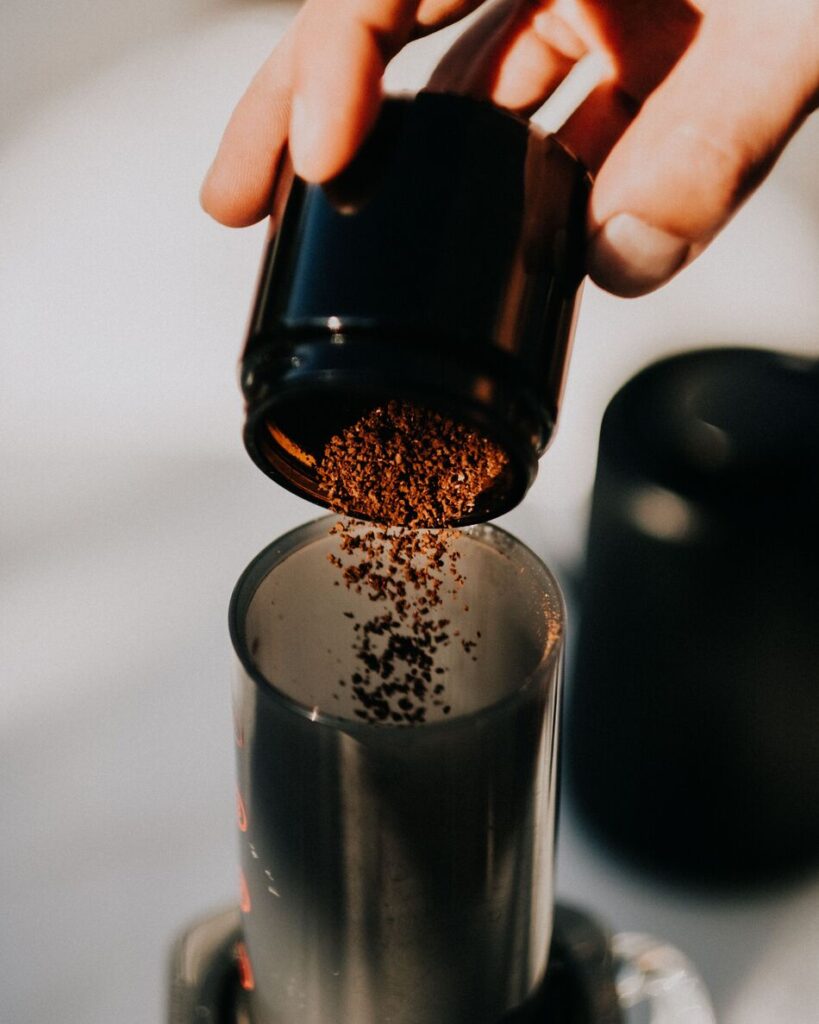
Choosing the best coffee beans for AeroPress can make a noticeable difference in the taste of your coffee. While the AeroPress is known for being a simple and flexible brewing method, the coffee beans you use can have an equally important impact on the final cup.
Different coffee beans can produce completely different flavors. Some may taste bright and fruity, while others can offer chocolate, caramel, nutty, or earthy notes. The roast level, origin, freshness, grind size, and brewing recipe can also change how those flavors appear in your cup.
One of the advantages of AeroPress brewing is that it works well with many different types of coffee. You are not limited to one particular roast or origin. However, choosing beans that match your preferred taste can make the brewing experience much more enjoyable.
For beginners, this can sometimes be confusing. Should you choose light roast, medium roast, or dark roast? Is Arabica better than Robusta? Should you buy whole beans or pre-ground coffee? And how fresh should the beans actually be?
In this guide, we will answer these questions and explain how to choose the best coffee beans for AeroPress. We will also cover roast levels, coffee origins, Arabica vs Robusta, freshness, grind size, storage, and tips for choosing coffee beans based on your taste preferences.
Whether you are new to AeroPress or already enjoy experimenting with different brewing recipes, this guide will help you choose coffee beans with greater confidence.
What Makes Coffee Beans Good for AeroPress?
The best coffee beans for AeroPress are not necessarily the same for everyone. The right beans depend largely on your preferred flavor, roast level, brewing recipe, and how you like your coffee to taste.
AeroPress is a versatile brewing method, so you can use beans from different origins and roast levels. However, some characteristics can make certain coffees easier and more enjoyable to brew.
1. Freshness
Freshly roasted coffee beans generally offer more noticeable aroma and flavor than stale beans.
Coffee gradually loses some of its aromatic compounds after roasting. For this reason, buying reasonably fresh beans and storing them properly can help you get better results from your AeroPress.
You do not necessarily need to use coffee immediately after roasting. Allowing freshly roasted beans some time to rest can be useful, particularly for espresso-style brewing, while AeroPress can work well across a range of coffee freshness levels.
2. Roast Level
The roast level has a major influence on the flavor of coffee.
- Light roast: Often brighter, more acidic, and more fruit-forward.
- Medium roast: Usually offers a balance of acidity, sweetness, and body.
- Dark roast: Often produces stronger roasted, bitter, smoky, or chocolate-like flavors.
A medium roast is a useful starting point if you are trying to find the best coffee beans for AeroPress because it can provide a balanced flavor profile.
However, this does not mean light or dark roasts are unsuitable. AeroPress gives you enough control to experiment with different roast levels.
3. Coffee Origin
Where coffee is grown can influence its flavor.
Coffee from different regions may have different characteristics because of factors such as climate, altitude, soil, coffee variety, and processing method.
For example, some coffees from Ethiopia are known for floral or fruity characteristics, while coffees from Brazil are often associated with nutty, chocolate, and sweet flavors.
The best approach is to try coffees from different origins and identify the flavor profiles you enjoy.
4. Flavor Profile
Think about the flavors you normally enjoy.
If you like:
- Fruity and bright coffee → Try some light-roasted single-origin coffees.
- Chocolate and caramel flavors → Medium-roasted beans can be a good choice.
- Strong and roasted flavors → Consider medium-dark or dark roasts.
- Nutty and balanced flavors → Brazilian and similar profiles may be worth exploring.
There is no universal answer to which beans are the best coffee beans for AeroPress. Your personal taste should be the main deciding factor.
5. Whole Beans vs Pre-Ground Coffee
Whole coffee beans are generally preferable if you have a good grinder because grinding immediately before brewing helps preserve aroma and allows you to control the grind size.
Pre-ground coffee can still produce good results and is more convenient, especially for beginners.
If you use whole beans, consistency becomes particularly important because AeroPress recipes are sensitive to grind size and brewing time.
6. Processing Method
Coffee processing can also influence flavor.
Common processing methods include:
- Washed
- Natural
- Honey or pulped natural
Washed coffees often have a clean and bright character, while naturally processed coffees can offer stronger fruity or sweet notes. Honey-processed coffees can fall somewhere between these styles.
Experimenting with different processing methods is another way to discover your preferred AeroPress coffee beans.
7. Quality of the Beans
The quality and condition of the beans matter more than simply choosing an expensive bag of coffee.
Look for coffee that provides useful information such as:
- Roast date
- Origin
- Bean variety, when available
- Processing method
- Flavor notes
- Recommended brewing methods
This information can help you understand what to expect before buying.
A Simple Starting Point for Beginners
If you are unsure where to start, choose a freshly roasted medium-roast Arabica coffee with a balanced chocolate, caramel, nutty, or slightly fruity flavor profile.
This gives you a versatile starting point without making the brewing process unnecessarily complicated.
Once you become comfortable with AeroPress brewing, you can experiment with lighter and darker roasts and coffees from different origins to discover what you enjoy most.
Best Roast Level for AeroPress
The roast level is one of the first things you should consider when choosing the best coffee beans for AeroPress. Coffee beans are generally described as light, medium, medium-dark, or dark roast, and each roast level can produce a different flavor experience.
The good news is that AeroPress works well with all of these roast levels. The best choice depends on whether you prefer bright and fruity coffee, balanced and sweet flavors, or strong and roasted notes.
Light Roast Coffee
Light-roasted coffee beans are roasted for a shorter period and generally retain more of the characteristics associated with their origin.
They can offer flavors such as:
- Citrus
- Berries
- Floral notes
- Stone fruit
- Tea-like flavors
- Bright acidity
AeroPress can be an excellent brewing method for exploring these characteristics because you can adjust water temperature, grind size, and brewing time.
Light roasts may require a little more experimentation to extract the flavors you want. If the coffee tastes sour or overly sharp, adjusting the grind, temperature, or brewing time may help.
Best for: Coffee drinkers who enjoy fruity, floral, bright, and complex flavors.
Medium Roast Coffee
Medium roast is often a good starting point for people who are new to AeroPress.
These beans can provide a balance between acidity, sweetness, body, and roast character. Depending on the coffee, you may notice flavors such as:
- Chocolate
- Caramel
- Nuts
- Brown sugar
- Dried fruit
- Mild fruitiness
For many beginners, medium roast coffee offers a familiar yet flavorful cup.
If you are unsure which beans to buy, a freshly roasted medium-roast coffee is a practical place to start when looking for the best coffee beans for AeroPress.
Best for: Beginners and people who prefer balanced, smooth, and versatile coffee.
Medium-Dark Roast Coffee
Medium-dark roasts have more pronounced roasting characteristics than medium roasts.
They may produce flavors such as:
- Dark chocolate
- Caramel
- Toasted nuts
- Molasses
- Spice
These coffees can work well in an AeroPress if you prefer a richer and stronger-tasting cup.
If the coffee tastes too bitter, you can experiment with a slightly lower water temperature, a coarser grind, or a shorter brewing time.
Best for: People who enjoy richer coffee with noticeable roasted flavors.
Dark Roast Coffee
Dark-roasted beans are roasted for longer and generally have stronger roasted characteristics.
Common flavor descriptions include:
- Dark chocolate
- Smoky notes
- Toasted flavors
- Bitterness
- Roasted nuts
Dark roast can be used with an AeroPress, but the brewing recipe may need some adjustment to avoid excessive bitterness.
Best for: Coffee drinkers who prefer bold, intense, and heavily roasted flavors.
Which Roast Is Best for AeroPress?
There is no single roast level that can be called the best for everyone.
A simple guide is:
| Roast Level | Typical Flavor | Best For |
|---|---|---|
| Light | Fruity, floral, bright | Specialty coffee lovers |
| Medium | Balanced, sweet, chocolatey | Beginners |
| Medium-Dark | Rich, caramel, roasted | Fuller flavors |
| Dark | Bold, smoky, bitter | Strong coffee lovers |
If you are just starting, medium roast is a safe and versatile choice. Once you understand your preferred flavor profile, try other roast levels to see which one works best for your AeroPress recipe.
The flexibility of AeroPress means you do not have to limit yourself to one roast. Experimenting with different beans is one of the easiest ways to improve your understanding of coffee and discover your personal favorite.
Light Roast vs Medium Roast vs Dark Roast for AeroPress
When choosing the best coffee beans for AeroPress, the roast level can have a major effect on the final taste. Light, medium, and dark roasts can all be brewed successfully with an AeroPress, but they offer very different flavor experiences.
Understanding these differences makes it easier to choose beans that match your personal preference.
Light Roast
Light-roasted beans generally have a brighter and more complex flavor profile.
You may notice:
- Fruity flavors
- Floral aromas
- Citrus notes
- Higher perceived acidity
- Tea-like characteristics
Because the roasting process is shorter, the coffee’s origin and processing characteristics can remain more noticeable.
For AeroPress users who enjoy experimenting with specialty coffee, light roast can be an interesting choice.
Choose light roast if you like: fruity, floral, bright, and complex coffee.
Medium Roast
Medium roast offers a balance between the characteristics of the coffee bean and the flavors created during roasting.
Depending on the beans, you may notice:
- Chocolate
- Caramel
- Nuts
- Brown sugar
- Mild fruit
- Balanced acidity
Medium roast is often the easiest starting point for beginners because it can work well with a variety of AeroPress recipes.
Choose medium roast if you like: balanced, smooth, sweet, and versatile coffee.
Dark Roast
Dark-roasted beans have stronger roasting characteristics and generally produce a more intense cup.
You may notice:
- Dark chocolate
- Toasted nuts
- Smoky notes
- Roasted flavors
- Higher bitterness
Dark roast can be enjoyable if you prefer bold coffee, but careful brewing is useful because excessive extraction may make the cup taste harsh or bitter.
Choose dark roast if you like: strong, bold, smoky, and heavily roasted flavors.
Roast Level Comparison
| Feature | Light Roast | Medium Roast | Dark Roast |
|---|---|---|---|
| Flavor | Bright and complex | Balanced and sweet | Bold and roasted |
| Acidity | Usually higher | Moderate | Usually lower |
| Body | Light to medium | Medium | Medium to full |
| Fruity notes | Common | Sometimes | Less common |
| Chocolate notes | Sometimes | Common | Common |
| Best for | Specialty coffee lovers | Beginners | Strong coffee lovers |
Which Roast Should You Start With?
If you are completely new to AeroPress, medium roast is a practical starting point.
It gives you enough sweetness and body to make the coffee enjoyable while still allowing you to notice differences between beans.
Once you become comfortable with your brewing recipe, try a light roast if you want more fruit and acidity. If you prefer a stronger and more roasted flavor, experiment with a medium-dark or dark roast.
Remember that roast level alone does not determine the quality of your coffee. Bean origin, processing, freshness, grind size, water quality, and brewing technique all contribute to the final cup.
Therefore, when searching for the best coffee beans for AeroPress, choose the roast level based on the flavor you actually enjoy rather than simply choosing the darkest or most expensive beans.
Arabica vs Robusta: Which Is Better for AeroPress?
When choosing the best coffee beans for AeroPress, you may come across two common coffee species: Arabica and Robusta. Both can be used with an AeroPress, but they have different flavor characteristics, caffeine levels, and overall profiles.
The better option depends on the type of coffee you enjoy.
Arabica Coffee Beans
Arabica is widely appreciated for its smoother and more complex flavor profile.
Depending on the origin and roast, Arabica beans can offer flavors such as:
- Chocolate
- Caramel
- Nuts
- Berries
- Citrus
- Floral notes
- Sweetness
Arabica is often a good choice for AeroPress because the brewing method can highlight subtle flavor differences between beans.
If you enjoy specialty coffee and want to explore different origins, a quality Arabica is an excellent starting point.
Robusta Coffee Beans
Robusta generally has a stronger and more intense flavor profile.
It may have:
- Earthy notes
- Woody flavors
- Nutty characteristics
- Strong roasted flavors
- More noticeable bitterness
Robusta also generally contains more caffeine than Arabica.
Although Robusta is sometimes associated with traditional espresso blends, it can also be brewed using an AeroPress.
If you prefer a stronger and more intense cup, Robusta or an Arabica-Robusta blend may be worth trying.
Arabica vs Robusta for AeroPress
| Feature | Arabica | Robusta |
|---|---|---|
| Flavor | Smooth and complex | Strong and intense |
| Typical acidity | Higher | Lower |
| Bitterness | Generally lower | Generally higher |
| Caffeine | Generally lower | Generally higher |
| Flavor variety | Wide | More earthy and robust |
| Best for | Smooth, nuanced coffee | Strong coffee lovers |
What About Arabica-Robusta Blends?
You do not necessarily have to choose one or the other.
Many coffee blends combine Arabica and Robusta to create a balance between flavor, body, intensity, and caffeine.
For example, a blend with a higher percentage of Arabica may provide sweetness and complexity, while a smaller amount of Robusta can add body and intensity.
Which One Should You Choose?
If you are looking for smooth, balanced, and flavorful coffee, Arabica is a good starting point.
If you prefer stronger, bolder, and more intense coffee, Robusta may suit your taste better.
For beginners searching for the best coffee beans for AeroPress, a freshly roasted medium-roast Arabica is a simple choice to start with. You can then experiment with Robusta or blends once you understand your preferred flavor profile.
There is no universal winner between Arabica and Robusta. The best choice is the coffee that tastes good to you and works well with your preferred AeroPress brewing recipe.
Whole Coffee Beans vs Pre-Ground Coffee for AeroPress
When searching for the best coffee beans for AeroPress, you will usually have two options: buying whole coffee beans or purchasing coffee that has already been ground.
Both can work well, but they offer different levels of freshness, convenience, and control.
Whole Coffee Beans
Whole beans are generally the preferred choice for people who have access to a good coffee grinder.
The main advantage is that you can grind the beans immediately before brewing. Freshly ground coffee can retain more of its aroma and flavor compared with coffee that has been sitting in ground form for a longer period.
Another major benefit is control over grind size.
With an AeroPress, you can adjust the grind according to your brewing recipe. If your coffee is too weak, sour, bitter, or difficult to press, changing the grind size can help you fine-tune the extraction.
Advantages of Whole Beans
- Better control over grind size
- Grind immediately before brewing
- Can provide fresher aroma
- Easier to experiment with recipes
- Useful for people who enjoy specialty coffee
If you are planning to use whole beans, investing in a consistent coffee grinder can make a noticeable difference. You can read our guide to Best Coffee Grinder in India to learn more about choosing a suitable grinder.
Pre-Ground Coffee
Pre-ground coffee is a convenient option, especially for beginners.
You do not need a grinder, and you can start brewing immediately after opening the package.
However, ground coffee generally loses freshness faster than whole beans because more of the coffee is exposed to air.
For this reason, if you choose pre-ground coffee, buying smaller quantities and storing them properly can help maintain better flavor.
Advantages of Pre-Ground Coffee
- Convenient
- No grinder required
- Quick and easy to use
- Good option for beginners
- Useful for travel
Which Is Better for AeroPress?
If maximum freshness and brewing control are your priorities, whole coffee beans are generally the better option.
If convenience is more important, high-quality pre-ground coffee can still produce an enjoyable cup.
| Feature | Whole Beans | Pre-Ground Coffee |
|---|---|---|
| Freshness | Excellent when freshly ground | Can decline faster |
| Convenience | Requires grinding | Very convenient |
| Grind control | Excellent | Limited |
| Equipment needed | Grinder required | No grinder required |
| Best for | Coffee enthusiasts | Beginners and convenience |
What Should Beginners Choose?
If you already own a grinder, choose whole beans and grind them shortly before brewing.
If you do not own a grinder, start with freshly roasted pre-ground coffee from a reliable roaster. Once you become more interested in AeroPress brewing, you can consider adding a grinder to your setup.
Ultimately, the best coffee beans for AeroPress are not only about the type of bean or roast. Freshness and grind consistency can be just as important when you are trying to improve the flavor of your coffee.
Best Grind Size for AeroPress
Grind size is one of the most important factors when brewing coffee with an AeroPress. Even if you choose the best coffee beans for AeroPress, the wrong grind size can make the coffee taste weak, sour, bitter, or overly strong.
Unlike some brewing methods that traditionally use one specific grind size, AeroPress recipes can work with a range of grind settings. This flexibility is one of the reasons AeroPress is popular among coffee enthusiasts.
What Grind Size Should You Use?
A medium-fine grind is a good starting point for many AeroPress recipes.
The grounds should generally be finer than what you would use for a French Press but not necessarily as fine as traditional espresso grounds.
However, there is no single perfect grind size because the ideal setting depends on your recipe, brewing time, water temperature, coffee dose, and personal taste.
Grind Size and Brewing Time
Grind size and brewing time are closely connected.
A finer grind generally provides more surface area for water to interact with the coffee. A coarser grind provides less surface area.
If you are using a shorter brewing time, a somewhat finer grind may help achieve sufficient extraction.
If you are using a longer steeping time, a coarser grind may work better.
What If the Coffee Tastes Sour?
If your AeroPress coffee tastes noticeably sour, sharp, or underdeveloped, the coffee may be under-extracted.
You can experiment by:
- Using a slightly finer grind
- Increasing the brewing time
- Using slightly hotter water
- Increasing agitation
Make only one change at a time so you can understand what affects the flavor.
What If the Coffee Tastes Bitter?
If the coffee tastes excessively bitter, dry, or harsh, it may be over-extracted.
Try:
- Using a slightly coarser grind
- Reducing brewing time
- Using slightly cooler water
- Reducing agitation
Again, make small adjustments rather than changing everything at once.
AeroPress Grind Size Guide
| Grind Size | Possible Use | General Result |
|---|---|---|
| Fine | Shorter recipes | Faster extraction |
| Medium-Fine | Good starting point | Balanced extraction |
| Medium | Longer recipes | Smooth and balanced |
| Coarse | Longer steeping | Slower extraction |
These are only starting points. Your particular coffee beans may respond differently.
Should You Grind Coffee Fresh?
Yes, grinding your coffee shortly before brewing is generally recommended.
Freshly ground beans can provide better aroma and flavor because the coffee has less time to lose volatile compounds after grinding.
If you are using the best coffee beans for AeroPress, a consistent grinder can help you get more repeatable results from one brew to another.
How to Find Your Ideal Grind Size
The easiest approach is to begin with a medium-fine grind and use the taste of the coffee as your guide.
If the coffee tastes:
Too sour → Try a finer grind or longer brewing time.
Too bitter → Try a coarser grind or shorter brewing time.
Too weak → Consider a finer grind, higher coffee dose, or longer brewing time.
Too strong → Try using slightly less coffee or more water.
Avoid changing several variables at once. Small adjustments will help you understand how your beans behave and eventually develop your preferred AeroPress recipe.
For consistent results, the quality of your grinder matters as well. A grinder that produces a more uniform grind can make it easier to control extraction and repeat your favorite recipe.
How Fresh Should Coffee Beans Be for AeroPress?
Freshness is an important factor when choosing the best coffee beans for AeroPress. Even high-quality beans can lose some of their aroma and flavor over time, particularly after they are ground.
This does not mean you need to buy coffee roasted yesterday. Instead, you should understand the roast date, resting period, and proper storage.
Why Does Coffee Freshness Matter?
Coffee beans contain many volatile compounds that contribute to aroma and flavor. After roasting, these compounds gradually change as the beans interact with oxygen.
As coffee gets older, you may notice that the aroma becomes less pronounced and the cup tastes flatter.
Fresh coffee can provide a more noticeable and enjoyable flavor, especially when brewed with a manual method such as AeroPress.
Check the Roast Date
When buying coffee beans, look for a package that clearly shows the roast date.
A roast date tells you when the coffee was roasted, while a “best before” date primarily indicates a recommended period for consumption or quality.
For coffee enthusiasts, the roast date can be more useful when evaluating freshness.
Should You Use Coffee Immediately After Roasting?
Not necessarily.
Freshly roasted coffee releases carbon dioxide during a process known as degassing. Allowing the beans to rest for a period after roasting can help them become more suitable for brewing.
The ideal resting period varies depending on factors such as roast level, bean characteristics, processing, and packaging.
For AeroPress, you can experiment with beans at different stages of freshness and determine what tastes best to you.
How Long Do Coffee Beans Stay Fresh?
There is no single expiration point at which coffee suddenly becomes unusable.
Instead, flavor gradually changes over time.
For the best flavor, many coffee drinkers prefer to use beans relatively soon after roasting rather than keeping them for many months.
Buying smaller quantities can be a practical approach if you drink coffee regularly but do not want beans sitting around for too long.
Whole Beans Stay Fresher Longer Than Ground Coffee
Whole beans generally retain their quality better than pre-ground coffee because less of their surface area is exposed to oxygen.
Once coffee is ground, its surface area increases significantly, which can accelerate the loss of aroma.
This is another reason why grinding your AeroPress coffee beans shortly before brewing can be beneficial.
Signs That Coffee May Be Too Old
Older coffee is not necessarily unsafe to drink, but its flavor may become less enjoyable.
You may notice:
- Weak aroma
- Flat flavor
- Less sweetness
- Dull or muted acidity
- Less complexity
If your brewing technique has not changed but your coffee suddenly tastes noticeably flat, the age of the beans could be one possible reason.
How to Keep Coffee Beans Fresh
Proper storage can help slow down the loss of coffee quality.
Follow these basic tips:
- Keep beans in an airtight container.
- Store them away from direct sunlight.
- Avoid excessive heat.
- Keep moisture away from the beans.
- Avoid opening the container unnecessarily.
- Buy quantities that you can reasonably use while they are still fresh.
A cool, dry, dark location is generally a better choice than a warm or humid area.
Freshness and the Best Coffee Beans for AeroPress
When looking for the best coffee beans for AeroPress, do not focus only on the brand, origin, or roast level.
Freshness, proper storage, and grinding the beans shortly before brewing can make a significant difference to the final cup.
A good-quality coffee that is stored properly and brewed at the right grind size will generally give you a better opportunity to experience the characteristics of the beans.
Best Coffee-to-Water Ratio for AeroPress
Choosing the best coffee beans for AeroPress is only one part of making a great cup. The amount of coffee and water you use can also have a major effect on the strength, body, and overall flavor of your brew.
There is no single coffee-to-water ratio that works perfectly for everyone. Your preferred strength, coffee beans, grind size, and brewing recipe all play a role.
A Good Starting Ratio
For beginners, a ratio around 1:15 to 1:17 is a useful starting point.
For example:
- 15 g coffee + 225 ml water → approximately 1:15
- 15 g coffee + 250 ml water → approximately 1:17
- 17 g coffee + 255 ml water → approximately 1:15
- 17 g coffee + 285 ml water → approximately 1:17
These measurements are starting points rather than strict rules.
What Happens When You Use More Coffee?
Using more coffee relative to the amount of water generally produces a stronger and more concentrated cup.
For example, you might increase the coffee dose if your brew tastes too weak.
However, simply adding more coffee is not always the best solution. If the underlying problem is grind size or extraction, increasing the dose may not fully correct the flavor.
What Happens When You Use More Water?
Using more water generally produces a lighter and less concentrated cup.
If your coffee tastes too strong, you can try increasing the amount of water.
Another option is to brew a concentrated AeroPress coffee and dilute it with additional hot water. This approach gives you more control over the final strength.
Coffee Ratio for Light Roast Beans
Light-roasted beans can sometimes benefit from a brewing approach that provides enough extraction to bring out their sweetness and flavor complexity.
You may experiment with:
- A slightly finer grind
- Longer brewing time
- Adequate water temperature
- A slightly higher coffee-to-water ratio
The exact recipe depends on the particular beans.
Coffee Ratio for Medium Roast Beans
Medium-roast coffee is usually a forgiving starting point for beginners.
A ratio around 1:15 to 1:17 can provide a balanced cup, after which you can adjust according to taste.
If the coffee tastes too weak, increase the coffee dose or reduce the amount of water.
If it tastes too strong, add more water or reduce the coffee dose.
Coffee Ratio for Dark Roast Beans
Dark-roasted coffee can taste strong and intense even when using a moderate coffee dose.
If your dark roast tastes too bitter or harsh, you can experiment with:
- Slightly less coffee
- More water
- A slightly coarser grind
- Shorter brewing time
- Slightly cooler water
The goal is to find a balance that reduces unwanted bitterness while retaining the flavors you enjoy.
Use a Coffee Scale for Better Consistency
A digital scale is not essential, but it can make your brewing much more repeatable.
Instead of estimating how much coffee or water you are using, you can measure both accurately.
This becomes especially useful when you are experimenting with the best coffee beans for AeroPress because you can compare different beans using the same brewing recipe.
Start Simple and Adjust
If you are new to AeroPress, do not worry about finding the perfect ratio immediately.
Start with a simple recipe, taste the coffee, and make small changes.
Too weak? Try slightly more coffee or less water.
Too strong? Try slightly more water or less coffee.
Too sour? Consider a finer grind or longer extraction.
Too bitter? Consider a coarser grind or shorter extraction.
The most important thing is consistency. Once you have a basic recipe that works, change one variable at a time to understand how it affects the flavor.
This approach will help you get the most from your best coffee beans for AeroPress and develop a brewing recipe that suits your personal taste.
Best Coffee Origins for AeroPress
The origin of coffee beans can have a significant influence on flavor. When searching for the best coffee beans for AeroPress, looking at the country or region where the coffee was grown can help you understand what kind of flavor profile you might expect.
However, coffee origin does not automatically determine quality. Processing method, coffee variety, altitude, roast level, freshness, and brewing technique also influence the final cup.
Ethiopian Coffee
Ethiopian coffee is often associated with bright, aromatic, and complex flavors.
Depending on the region and processing method, you may find notes such as:
- Berries
- Citrus
- Floral aromas
- Stone fruit
- Tea-like flavors
AeroPress can be a good method for exploring these characteristics because you can adjust the brewing recipe to highlight sweetness, acidity, or body.
Best for: People who enjoy fruity, floral, and complex coffee.
Colombian Coffee
Colombian coffee is widely available and can offer a balanced combination of sweetness, acidity, and body.
Depending on the beans, you may notice:
- Caramel
- Chocolate
- Nuts
- Citrus
- Red fruit
Because Colombian coffee can offer a broad range of flavor profiles, it can be a good starting point for someone experimenting with different AeroPress coffee beans.
Best for: Beginners who want balanced and approachable coffee.
Brazilian Coffee
Brazilian coffee is often associated with nutty, chocolatey, and sweet flavors.
Common tasting notes may include:
- Milk chocolate
- Nuts
- Caramel
- Brown sugar
- Dried fruit
These characteristics can work particularly well if you prefer a smooth and less acidic cup.
Best for: People who enjoy chocolatey, nutty, and naturally sweet coffee.
Guatemalan Coffee
Coffee from Guatemala can offer a combination of sweetness, acidity, body, and complexity.
Depending on the specific coffee, you may find notes such as:
- Chocolate
- Caramel
- Citrus
- Stone fruit
- Spices
This can make Guatemalan coffee an interesting choice for AeroPress users who want more complexity without moving entirely toward very bright coffee.
Best for: Drinkers who enjoy balanced coffee with noticeable acidity and sweetness.
Costa Rican Coffee
Costa Rican coffees are often recognized for clean flavors and bright acidity.
You may find characteristics such as:
- Citrus
- Honey
- Fruit
- Caramel
- Floral notes
These coffees can work well with AeroPress brewing when you want a clean and lively cup.
Best for: People who enjoy bright, clean, and sweet coffee.
Indonesian Coffee
Indonesian coffees can have a very different flavor profile from many African or Central American coffees.
Depending on the origin and processing method, you may encounter:
- Earthy flavors
- Spices
- Dark chocolate
- Herbs
- Full body
If you prefer richer and more unusual flavors, Indonesian coffee can be worth exploring.
Best for: People who enjoy earthy, spicy, and full-bodied coffee.
Which Coffee Origin Should You Choose?
There is no single country that produces the best coffee beans for AeroPress.
A simple starting guide is:
| Origin | Common Flavor Characteristics | Best For |
|---|---|---|
| Ethiopia | Fruity, floral, citrus | Complex and bright coffee |
| Colombia | Caramel, chocolate, balanced | Beginners |
| Brazil | Nutty, chocolate, sweet | Smooth and low-acidity cups |
| Guatemala | Chocolate, fruit, spice | Balanced complexity |
| Costa Rica | Clean, citrus, sweet | Bright and clean cups |
| Indonesia | Earthy, spicy, full-bodied | Rich and distinctive flavors |
Keep in mind that these are broad generalizations. Coffee from the same country can taste very different depending on the farm, variety, processing method, roast, and freshness.
The best way to discover your favorite AeroPress coffee beans is to try coffees from different origins and take note of the flavors you enjoy most.
Single-Origin vs Coffee Blends for AeroPress
When looking for the best coffee beans for AeroPress, you may notice that coffee bags are often labeled either single-origin or blend. Both options can produce excellent coffee, but they offer different flavor experiences.
The right choice depends on whether you prefer consistency, complexity, or the opportunity to explore different coffee characteristics.
What Is Single-Origin Coffee?
Single-origin coffee generally comes from a specific country, region, farm, or group of farms, depending on how the roaster defines the term.
Because the beans come from a more specific source, single-origin coffee can allow you to explore the characteristics associated with that particular growing region and coffee variety.
With an AeroPress, you can experiment with the brewing recipe to highlight different characteristics of a single-origin coffee.
For example, a light-roasted Ethiopian coffee may offer fruity or floral notes, while a Brazilian coffee may provide chocolatey and nutty characteristics.
Best for: Coffee drinkers who enjoy exploring different flavors and origins.
What Is a Coffee Blend?
A coffee blend combines beans from two or more origins or coffee lots.
Roasters may create blends to achieve a particular flavor profile, body, aroma, or level of consistency.
For example, one coffee may contribute sweetness while another adds body or acidity.
Blends can also be designed to produce a more consistent flavor throughout the year.
Best for: People who prefer familiar, balanced, and consistent coffee.
Single-Origin vs Blend: Which Is Better for AeroPress?
Neither option is automatically better.
An AeroPress is flexible enough to work with both single-origin coffees and blends.
If you enjoy experimenting, single-origin coffee can be more interesting because you can compare beans from different regions.
If you want a dependable everyday coffee, a well-made blend may be a better choice.
Comparison at a Glance
| Feature | Single-Origin | Coffee Blend |
|---|---|---|
| Source | Specific origin or region | Multiple origins or lots |
| Flavor | Often distinctive | Designed for balance |
| Consistency | Can vary by season | Often more consistent |
| Experimentation | Excellent | Moderate |
| Beginner-friendly | Yes | Yes |
| Best for | Exploring flavors | Everyday brewing |
Which Should Beginners Buy?
If you are new to specialty coffee, there is no need to feel pressured to buy expensive single-origin beans.
A balanced blend can be an excellent starting point because it is often designed to provide a predictable and approachable flavor.
Once you become familiar with your preferred roast and flavor profile, you can start trying single-origin coffees.
This is one of the easiest ways to understand what you personally consider the best coffee beans for AeroPress.
How to Experiment With Both
A simple way to compare them is to use the same AeroPress recipe for two different coffees.
Keep the following consistent:
- Coffee dose
- Water amount
- Water temperature
- Grind size
- Brewing time
- Filter type
Then compare the aroma, acidity, sweetness, body, and aftertaste.
Once you understand how different beans respond to the same recipe, you can begin adjusting your brewing method to suit each coffee.
Ultimately, the choice between single-origin and blends comes down to personal preference. Both can produce an excellent AeroPress brew when the beans are fresh and the brewing process is well controlled.
Best Coffee Beans for Different Taste Preferences
The best coffee beans for AeroPress depend heavily on your personal taste. There is no single coffee bean that will taste perfect to everyone.
Some people prefer fruity and bright coffee, while others enjoy chocolatey, nutty, sweet, or bold flavors. Understanding your preferred flavor profile can make choosing coffee beans much easier.
If You Like Fruity Coffee
If you enjoy fruit-forward coffee, look for light-roasted beans with tasting notes such as:
- Berry
- Citrus
- Peach
- Apricot
- Plum
- Tropical fruit
Ethiopian and some Kenyan coffees are often worth exploring if you enjoy bright and fruity flavors.
AeroPress can work particularly well for this style because you can adjust the brewing process to highlight acidity and sweetness.
If You Like Chocolatey Coffee
If you prefer familiar, smooth flavors, look for beans described with notes such as:
- Milk chocolate
- Dark chocolate
- Cocoa
- Caramel
- Brown sugar
Brazilian, Colombian, and Central American coffees can offer these characteristics, depending on the specific coffee and roast.
A medium roast is often a good starting point.
If You Like Nutty Coffee
For nutty flavors, look for tasting notes such as:
- Almond
- Hazelnut
- Peanut
- Walnut
- Toasted nuts
Brazilian coffees are often a popular choice for this flavor profile.
These coffees can be particularly enjoyable if you prefer a smooth cup without very strong acidity.
If You Like Sweet Coffee
Coffee does not need added sugar to taste sweet.
Certain beans naturally offer flavors that remind you of:
- Caramel
- Honey
- Brown sugar
- Toffee
- Molasses
- Dried fruit
A medium roast can be a good place to start when looking for naturally sweet AeroPress coffee beans.
If You Like Strong Coffee
If you prefer a bold and intense cup, consider medium-dark or dark-roasted beans.
You may enjoy flavor notes such as:
- Dark chocolate
- Roasted nuts
- Smoke
- Spice
- Toasted flavors
You can also experiment with Arabica-Robusta blends if you prefer additional body and intensity.
If You Prefer Low-Acidity Coffee
Some coffee drinkers dislike bright or acidic flavors.
If that sounds like you, look for beans described as:
- Smooth
- Low acidity
- Chocolatey
- Nutty
- Full-bodied
Medium or medium-dark roasted coffees may be more suitable than very light roasts.
However, perceived acidity is influenced by several factors, including origin, roast, processing, and brewing technique.
If You Like Complex Specialty Coffee
If you enjoy discovering unusual flavors, try light-roasted single-origin coffees.
Look for beans with tasting notes such as:
- Floral
- Jasmine
- Tropical fruit
- Wine-like
- Tea-like
- Stone fruit
These coffees can be more challenging for beginners, but they can also be very rewarding when brewed carefully.
Quick Flavor Guide
| Your Preference | Coffee Characteristics to Look For |
|---|---|
| Fruity | Light roast, berry, citrus, tropical fruit |
| Chocolatey | Medium roast, cocoa, chocolate |
| Nutty | Brazil-style profiles, almond, hazelnut |
| Sweet | Caramel, honey, brown sugar |
| Strong | Medium-dark or dark roast |
| Low acidity | Smooth, chocolatey, nutty |
| Complex | Light roast, single-origin, floral or fruity |
How to Choose Your Beans
Before buying coffee, think about the flavors you already enjoy.
If you like dark chocolate and nuts, a medium-roast coffee with chocolate and nutty tasting notes may be a better starting point than a highly acidic light roast.
If you enjoy fruit juices and tea, a light-roasted single-origin coffee may be more appealing.
The goal is not to find the coffee that receives the highest rating. The goal is to find the best coffee beans for AeroPress for your own taste preferences.
Once you discover a flavor profile you enjoy, you can use the information on coffee bags to find similar beans in the future.
How to Read a Coffee Bag Before Buying AeroPress Coffee Beans
Finding the best coffee beans for AeroPress becomes much easier when you know how to read a coffee bag. Coffee packaging often contains useful information about the beans, but some of the terms can be confusing for beginners.
Instead of choosing coffee only by the brand name or attractive packaging, look for a few important details.
1. Roast Date
The roast date tells you when the coffee was roasted.
This is one of the most useful pieces of information to check when buying coffee beans. Fresher coffee generally offers a more noticeable aroma and flavor than beans that have been sitting around for a long time.
If possible, choose coffee with a clearly printed roast date rather than relying only on a best-before date.
2. Origin
The origin tells you where the coffee was grown.
You may see information such as:
- Brazil
- Colombia
- Ethiopia
- Guatemala
- Costa Rica
- Indonesia
Some packages provide more specific information, such as the region, farm, or cooperative.
Origin can give you an idea of the flavor characteristics you might expect, although it does not guarantee a particular taste.
3. Roast Level
Look for labels such as:
- Light roast
- Medium roast
- Medium-dark roast
- Dark roast
If you are a beginner, a medium roast can be a good starting point because it often provides a balance between sweetness, acidity, body, and roast flavor.
4. Tasting Notes
Many specialty coffee bags list tasting notes.
For example, a bag might describe the coffee as having:
Chocolate + Caramel + Almond
or:
Berry + Citrus + Floral
These descriptions are not ingredients added to the coffee. They are ways of describing the flavors and aromas that the coffee may remind you of.
Tasting notes can be particularly helpful when choosing the best coffee beans for AeroPress based on your personal preferences.
5. Processing Method
Coffee may be processed using methods such as:
- Washed
- Natural
- Honey
Processing can influence the final flavor.
Washed coffees are often associated with cleaner and brighter profiles, while natural coffees can have stronger fruity and sweet characteristics.
However, these are general tendencies, and individual coffees can vary significantly.
6. Coffee Variety
Some coffee bags mention the variety or cultivar of the coffee.
You may see names such as:
- Typica
- Bourbon
- Caturra
- SL28
- Heirloom
This information can be interesting for coffee enthusiasts who want to explore how different varieties influence flavor.
For beginners, however, it is not necessary to understand every variety before buying coffee.
7. Grind Information
If you are buying whole beans, the package should clearly indicate that they are whole beans.
If you are buying pre-ground coffee, check whether the grind is suitable for your brewing method.
For AeroPress, you can generally start with a medium-fine grind and adjust it according to your recipe and taste.
8. Recommended Brewing Methods
Some roasters provide brewing recommendations on the packaging.
Different coffee brewing methods
You may see suggestions for:
- AeroPress
- Pour-over
- French Press
- Espresso
- Drip coffee
A recommendation for AeroPress can be useful, but it does not mean the coffee cannot be used with another brewing method.
9. Bean Type
The package may identify the coffee as:
- 100% Arabica
- Robusta
- Arabica-Robusta blend
If you prefer smooth and complex flavors, Arabica can be a good starting point.
If you prefer stronger and more intense coffee, you may want to experiment with Robusta or blends.
10. Package Size
Do not automatically choose the largest bag because it appears to offer better value.
If you drink coffee slowly, a smaller package may help you use the beans while they are still relatively fresh.
Buying smaller quantities also gives you an opportunity to try different coffees without committing to a large bag.
What Should Beginners Look For?
If you are buying your first bag of AeroPress coffee beans, a simple checklist is:
✓ Clearly printed roast date
✓ Medium roast
✓ Whole beans if you have a grinder
✓ Flavor notes that match your preferences
✓ Reliable roaster or seller
✓ Appropriate package size
You do not need to understand every technical detail on the package. Start with the information that directly affects your preferences, then experiment with different origins, roast levels, and processing methods as you become more familiar with coffee.
How to Store Coffee Beans for AeroPress
Even if you choose the best coffee beans for AeroPress, poor storage can cause the beans to lose their aroma and flavor more quickly.
Coffee beans are affected by oxygen, moisture, heat, light, and time. Proper storage cannot keep coffee fresh forever, but it can help slow down the loss of quality.
Keep Coffee Beans in an Airtight Container
After opening the original package, keeping coffee in an airtight container can help reduce exposure to oxygen.
Choose a container with a secure seal and avoid opening it unnecessarily.
If the coffee bag already has a good resealable closure and one-way valve, you may be able to keep the beans in their original packaging as long as it is properly sealed.
Keep Coffee Away From Heat
Heat can negatively affect coffee quality.
Avoid storing your coffee beans:
- Near the stove
- Next to an oven
- In direct sunlight
- Near other heat-producing appliances
A cool and stable environment is generally preferable.
Avoid Moisture
Coffee beans should be kept dry.
Moisture can affect the beans and may lead to undesirable changes in flavor or quality.
For this reason, avoid storing coffee near areas with high humidity or frequent exposure to steam.
Protect Beans From Light
Direct sunlight and strong light can contribute to the deterioration of coffee quality.
An opaque or dark-colored airtight container can help protect the beans from excessive light.
Should You Store Coffee Beans in the Refrigerator?
For everyday storage, refrigeration is generally unnecessary.
Coffee can absorb odors from surrounding foods, and repeated movement between cold and warm environments can introduce condensation.
Unless you have a specific reason and suitable airtight storage, a cool, dry, dark location is usually a simpler option.
What About Freezing Coffee Beans?
Freezing can be useful when you need to store coffee for a longer period, particularly if the beans are packaged carefully in an airtight, moisture-resistant container.
However, for most people who purchase small quantities of coffee and use them regularly, proper room-temperature storage is simpler.
If you do freeze coffee, avoid repeatedly taking the same container in and out of the freezer because temperature changes can introduce moisture.
Store Whole Beans Whenever Possible
Whole beans generally retain their aroma better than pre-ground coffee.
If you have a grinder, keep the beans whole and grind only the amount you need immediately before brewing.
This can make a noticeable difference when preparing AeroPress coffee.
How Much Coffee Should You Buy?
Buying a very large bag may seem economical, but it may not be the best option if you take a long time to finish it.
A better approach is to buy an amount that you can reasonably consume while the coffee still tastes fresh.
For regular coffee drinkers, smaller bags can also make it easier to try different origins and roast levels.
Storage Mistakes to Avoid
Avoid these common mistakes:
- Leaving the coffee bag open
- Storing beans near heat
- Exposing beans to direct sunlight
- Keeping coffee in a humid area
- Storing beans next to strongly scented foods
- Opening the container repeatedly
- Buying more coffee than you can reasonably use
Storage and Coffee Flavor
Good storage will not turn average coffee into exceptional coffee, but it can help preserve the characteristics of good beans.
When you combine fresh AeroPress coffee beans with proper storage, a consistent grind, good-quality water, and a suitable brewing recipe, you have a much better foundation for making enjoyable coffee at home.
Best Water Temperature for AeroPress Coffee
When brewing the best coffee beans for AeroPress, water temperature is another important factor to consider. The temperature of the water affects how quickly compounds are extracted from the coffee grounds and can influence the final taste.
You do not need an expensive temperature-controlled kettle to make good AeroPress coffee, but having a reasonable idea of water temperature can make your results more consistent.
What Is the Best Water Temperature for AeroPress?
A good starting range for AeroPress is around 85°C to 96°C (185°F to 205°F).
The ideal temperature can vary depending on the roast level and coffee beans.
For many medium-roast coffees, starting somewhere around 90°C to 94°C can be a practical approach.
However, do not treat these numbers as strict rules. Taste should ultimately guide your adjustments.
Water Temperature for Light Roast Coffee
Light-roasted beans are often denser and can benefit from a brewing approach that provides sufficient extraction.
You may want to experiment toward the higher end of the temperature range.
If your light roast tastes sour, sharp, or underdeveloped, slightly hotter water or a longer brewing time may help.
However, if the coffee becomes harsh or overly bitter, reduce the temperature or adjust another brewing variable.
Water Temperature for Medium Roast Coffee
Medium-roast coffee is generally quite versatile.
A temperature around 90°C to 94°C can be a useful starting point for many medium-roast AeroPress coffee beans.
From there, you can make small adjustments depending on the flavor.
Water Temperature for Dark Roast Coffee
Dark-roasted coffee can be more prone to producing strong roasted and bitter flavors.
Using slightly cooler water may help create a smoother cup if you find your coffee too bitter or harsh.
You can experiment around the lower end of the recommended range and adjust according to taste.
Does Water Quality Matter?
Yes.
Coffee is mostly water, so the quality of the water you use can have a noticeable impact on the final cup.
If your tap water has a strong chlorine smell, unpleasant taste, or excessive mineral content, it may affect your coffee.
Filtered drinking water can be a useful option if your local water does not taste good on its own.
Avoid Extremely Distilled Water
While clean water is important, completely mineral-free water is not necessarily ideal for coffee brewing.
Some minerals in water contribute to extraction and flavor development.
The goal is generally to use clean, fresh-tasting water with a suitable mineral balance rather than simply choosing the purest possible water.
Should You Use Boiling Water?
Water that has just reached a full boil is around 100°C, which is higher than the commonly recommended starting range for many AeroPress recipes.
You can allow freshly boiled water to cool slightly before brewing.
However, the exact approach depends on the coffee and recipe. Some brewers intentionally use hotter water, particularly with certain light-roast coffees.
How to Control Water Temperature
If you have a temperature-controlled kettle, you can set the desired temperature directly.
If you are using a regular kettle, simply bring the water to a boil and allow it to cool briefly before pouring.
A kitchen thermometer can also help if you want to experiment more precisely.
A Simple Temperature Guide
| Coffee Roast | Starting Temperature |
|---|---|
| Light roast | 92–96°C |
| Medium roast | 90–94°C |
| Medium-dark roast | 88–92°C |
| Dark roast | 85–90°C |
These ranges are only starting points. The best coffee beans for AeroPress can behave differently depending on their origin, processing, roast profile, and freshness.
Let Taste Guide You
If your coffee tastes sour or under-extracted, consider slightly increasing the temperature.
If it tastes bitter, harsh, or overly dry, consider lowering the temperature.
Make small changes and keep the rest of your recipe consistent. This will help you understand how water temperature affects your particular coffee beans.
AeroPress gives you enough control to fine-tune these variables, which is one of the reasons it is such a useful brewing method for coffee enthusiasts.
A Simple AeroPress Coffee Recipe for Beginners
Once you have chosen the best coffee beans for AeroPress, the next step is learning how to brew them properly. You do not need a complicated recipe to get started.
A simple and repeatable brewing method can help you understand how your coffee tastes before you begin experimenting with different variables.
What You Need
For a basic AeroPress recipe, you will need:
- AeroPress coffee maker
- 15 grams of coffee
- 225–250 ml of water
- AeroPress paper filter
- Kettle
- Coffee grinder, if using whole beans
- Mug
- Spoon or stirrer
- Digital scale, if available
A medium-fine grind is a good starting point for this recipe.
Step 1: Heat the Water
Heat approximately 225–250 ml of fresh water.
For a medium-roast coffee, start around 90–94°C.
If you do not have a temperature-controlled kettle, allow freshly boiled water to cool slightly before brewing.
Step 2: Grind the Coffee
Measure approximately 15 grams of coffee beans and grind them to a medium-fine consistency.
If you are using pre-ground coffee, choose a grind suitable for AeroPress and adjust it based on the taste of the finished brew.
Freshly grinding your AeroPress coffee beans immediately before brewing can help preserve their aroma and flavor.
Step 3: Prepare the Filter
Place a paper filter inside the filter cap and rinse it with hot water.
Rinsing can remove some paper taste and also preheat the brewing equipment.
Be careful when handling hot water.
Step 4: Add the Coffee
Place the AeroPress on top of your mug and add the ground coffee.
Gently shake or level the coffee bed so the grounds are distributed evenly.
Step 5: Add Hot Water
Start your timer and slowly pour approximately 225 ml of water over the coffee grounds.
Make sure the grounds are evenly saturated.
Step 6: Stir
Gently stir the coffee and water mixture several times.
Stirring helps ensure that the coffee grounds are evenly exposed to water.
You do not need to stir aggressively.
Step 7: Allow the Coffee to Brew
Allow the coffee to steep for approximately 60–90 seconds as a starting point.
The exact brewing time can be adjusted according to your coffee beans and personal taste.
Step 8: Press the Plunger
Insert the plunger and begin pressing slowly and steadily.
You do not need to force it.
If the plunger becomes extremely difficult to press, stop and check your grind size. A grind that is too fine can increase resistance.
Step 9: Taste the Coffee
Taste the coffee before making major adjustments.
Ask yourself:
- Is it too sour?
- Is it too bitter?
- Is it too weak?
- Is it too strong?
- Does it taste balanced?
- Can you notice the flavor characteristics of the beans?
Your answers will help you decide what to change in your next brew.
How to Adjust the Recipe
If your coffee tastes too sour, try:
- A slightly finer grind
- Longer brewing time
- Slightly hotter water
If it tastes too bitter, try:
- A slightly coarser grind
- Shorter brewing time
- Slightly cooler water
If it tastes too weak, consider using more coffee or slightly less water.
If it tastes too strong, add a little more water or reduce the coffee dose.
Do Not Change Everything at Once
One of the most common mistakes beginners make is changing several brewing variables simultaneously.
For example, if you change the grind size, temperature, coffee dose, and brewing time at the same time, it becomes difficult to know which change affected the flavor.
Instead, change one variable at a time.
This simple approach will help you understand how different AeroPress coffee beans behave and gradually develop a recipe that works for your taste.
Beginner Recipe at a Glance
| Variable | Starting Point |
|---|---|
| Coffee | 15 g |
| Water | 225–250 ml |
| Grind | Medium-fine |
| Temperature | 90–94°C |
| Brew time | 60–90 seconds |
| Filter | Paper |
| Method | Standard AeroPress |
This recipe is only a starting point. Once you become comfortable with it, you can experiment with different coffee-to-water ratios, grind sizes, temperatures, and brewing times to find your preferred cup.
Common Mistakes When Buying Coffee Beans for AeroPress
Even after learning about roast levels, origins, freshness, and grind size, it is easy to make mistakes when buying coffee. Avoiding these mistakes can help you get better value and a better-tasting cup.
Here are some of the most common mistakes people make when looking for the best coffee beans for AeroPress.
1. Choosing Coffee Only by the Brand
A familiar brand does not automatically mean its coffee will match your taste.
Two coffees from the same brand can have completely different roast levels, origins, and flavor profiles.
Instead of choosing only based on the brand name, check:
- Roast date
- Roast level
- Origin
- Flavor notes
- Bean type
- Processing method
This information gives you a better idea of what the coffee may taste like.
2. Buying Beans Without Checking the Roast Date
A bag may have an attractive package and impressive claims, but if you cannot find a roast date, it can be difficult to judge freshness.
Whenever possible, look for coffee with a clearly stated roast date.
Freshness is particularly important if you want to experience the aroma and flavor characteristics of specialty coffee.
3. Buying Too Much Coffee
Buying a large bag may appear economical, but it is not always the best choice.
If you take several months to finish the coffee, the beans may gradually lose aroma and flavor.
Buying smaller quantities allows you to:
- Keep coffee fresher
- Try different beans
- Compare different origins
- Experiment with roast levels
4. Choosing the Darkest Roast Because You Want Strong Coffee
Dark roast does not necessarily mean more caffeine or better coffee.
Dark roasting creates stronger roasted flavors, which can make coffee taste more intense, but “strong” can mean different things.
If you want a more concentrated cup, you can adjust the coffee dose and brewing recipe rather than automatically choosing a very dark roast.
5. Ignoring Your Own Taste Preferences
Coffee recommendations are useful, but your taste should be the final deciding factor.
If you enjoy chocolate and caramel, there is little reason to buy a highly fruity coffee simply because someone called it the best.
Use tasting notes as a guide rather than a guarantee.
6. Buying Pre-Ground Coffee Without Considering Freshness
Pre-ground coffee is convenient, but it generally loses aroma faster than whole beans.
If you have a grinder, whole beans can give you more control over freshness and grind size.
If you do not have a grinder, choose a reliable pre-ground coffee and store it properly after opening.
7. Using the Wrong Grind Size
Even the best coffee beans for AeroPress can taste disappointing if the grind size is unsuitable for your recipe.
If your coffee tastes sour and weak, you may need a finer grind or longer extraction.
If it tastes bitter and dry, a coarser grind or shorter extraction may help.
8. Buying Coffee Without Considering the Brewing Method
Some coffee is roasted with a particular brewing style in mind.
While AeroPress is flexible and can brew many different coffees, checking whether the roaster recommends the beans for filter or manual brewing can be useful.
You can still experiment, but a brewing recommendation can provide a helpful starting point.
9. Focusing Only on Price
Expensive coffee does not automatically mean better coffee for your preferences.
A moderately priced coffee that matches your taste can be more enjoyable than an expensive coffee with a flavor profile you dislike.
Instead of asking only:
“What is the most expensive coffee?”
ask:
“What coffee matches my taste and brewing style?”
10. Buying Without Trying Different Coffees
Once you find one coffee you enjoy, it can be tempting to buy the same beans forever.
However, AeroPress makes it easy to experiment.
Try comparing:
- Light vs medium roast
- Single-origin vs blend
- Brazil vs Colombia
- Fruity vs chocolatey profiles
- Whole beans vs pre-ground
Over time, these experiments can help you understand exactly what you prefer.
A Simple Buying Checklist
Before purchasing your next bag of AeroPress coffee beans, check these points:
✓ Roast date is available
✓ Roast level matches your preference
✓ Flavor notes sound appealing
✓ Beans are suitable for your brewing approach
✓ Package size matches your consumption
✓ Whole beans if you have a grinder
✓ Seller or roaster is reliable
You do not need to find a universally “perfect” coffee. The goal is to find beans that suit your taste, brewing method, and budget.
Once you understand what to look for, choosing the best coffee beans for AeroPress becomes much simpler and more enjoyable.
AeroPress Coffee Beans Buying Guide
Choosing the best coffee beans for AeroPress does not have to be complicated. Once you understand roast level, freshness, origin, flavor profile, and grind size, you can make a much more informed buying decision.
The key is to choose coffee based on your taste rather than simply buying the most popular or expensive option.
1. Decide What Flavor You Prefer
Before buying coffee, think about the flavors you enjoy.
If you like:
- Chocolate and caramel → Look for medium-roast beans.
- Fruity and floral flavors → Try light-roast single-origin coffee.
- Nutty and smooth flavors → Look for Brazilian or similar flavor profiles.
- Bold and roasted flavors → Consider medium-dark or dark roast.
- Sweet and balanced coffee → Medium roast can be a good starting point.
Knowing your preferred flavor profile can narrow down your choices quickly.
2. Choose the Right Roast Level
For most beginners, medium roast is a safe starting point.
It provides a balance between sweetness, acidity, body, and roast character.
Once you become more comfortable with AeroPress brewing, you can experiment with light or dark roasts.
3. Check the Roast Date
Whenever possible, choose coffee with a clearly printed roast date.
Freshly roasted coffee can offer better aroma and flavor than coffee that has been stored for a long time.
Avoid buying more coffee than you can reasonably consume.
4. Whole Beans or Pre-Ground?
If you own a good grinder, whole beans are generally the better choice.
You can grind only the amount you need immediately before brewing and adjust the grind size according to your recipe.
If convenience is more important, pre-ground coffee can still work well.
5. Consider the Origin
Try different origins to discover the flavor profiles you prefer.
For example:
Brazil: Often chocolatey and nutty.
Colombia: Often balanced, sweet, and approachable.
Ethiopia: Often fruity, floral, and bright.
Guatemala: Often chocolatey, sweet, and complex.
These are broad characteristics, and individual coffees can vary considerably.
6. Check the Processing Method
If the coffee package provides processing information, it can help you understand the expected flavor profile.
Washed coffees often have a cleaner and brighter character, while natural coffees can have stronger fruity and sweet characteristics.
Honey-processed coffees can offer characteristics between these styles.
7. Look at the Tasting Notes
Tasting notes are useful when selecting the best coffee beans for AeroPress.
For example:
Chocolate + Caramel + Almond
would generally be a good indication for someone who prefers a smooth and nutty cup.
On the other hand:
Blueberry + Citrus + Jasmine
may appeal more to someone who enjoys bright and floral coffee.
Remember that tasting notes describe perceived flavors. They do not mean those ingredients have been added to the coffee.
8. Consider the Package Size
If you are trying a coffee for the first time, buying a smaller package can be a smart approach.
It allows you to test the flavor without committing to a large quantity.
Once you find a coffee you really enjoy, you can consider buying a larger package if the value makes sense.
9. Consider Your Budget
You do not need extremely expensive specialty coffee to enjoy AeroPress.
There are many affordable options that can produce a very good cup.
A useful approach is to establish a budget and then compare coffees based on:
- Roast date
- Origin
- Flavor profile
- Package size
- Roaster reputation
- Customer feedback
10. Check Customer Reviews Carefully
Online reviews can help you identify common feedback about a particular coffee.
However, remember that taste is subjective.
One person may describe a coffee as wonderfully fruity, while another may find it too acidic.
Look for repeated patterns in reviews rather than relying on a single opinion.
Where to Buy Coffee Beans for AeroPress
You can buy coffee beans from:
- Local specialty coffee roasters
- Coffee company websites
- Supermarkets
- Online marketplaces
- Specialty coffee retailers
If you are buying online, check the seller, roast date, package size, and product information before placing your order.
🛒 Check Current Coffee Bean Options
If you prefer buying coffee online, you can compare currently available AeroPress-friendly coffee beans on Amazon and check the latest price, availability, and customer reviews before purchasing.
[ Check Coffee Beans on Amazon → ]
As an Amazon Associate, CoffeeNest earns from qualifying purchases.
Final Buying Rule
The best purchase is not necessarily the coffee with the highest rating or the most expensive price tag.
Choose beans that match your preferred flavor, roast level, freshness requirements, and budget.
As you experiment with different coffees, you will gradually develop a better understanding of what makes the best coffee beans for AeroPress for your own taste.
How to Test Different Coffee Beans With an AeroPress
Once you understand what to look for in coffee, the best way to discover your favorite beans is to actually compare them. The AeroPress is particularly useful for this because you can make small adjustments to the brewing process and observe how different coffees respond.
Instead of changing everything from one brew to another, use a consistent method and compare one factor at a time.
Start With the Same Basic Recipe
When comparing two different coffees, begin with the same recipe.
For example:
- Coffee: 15 g
- Water: 225 ml
- Temperature: 92°C
- Grind: Medium-fine
- Brewing time: 60–90 seconds
Use the same AeroPress, filter, water, and brewing technique for both coffees.
This gives you a more useful comparison.
Compare the Aroma First
Before tasting, smell the freshly ground coffee.
Notice whether the aroma reminds you of:
- Chocolate
- Nuts
- Fruit
- Flowers
- Spices
- Caramel
- Toasted flavors
Then smell the brewed coffee.
The aroma can give you clues about the coffee’s flavor profile.
Pay Attention to Acidity
Acidity is not necessarily a negative characteristic.
In coffee, acidity can create a lively and refreshing sensation.
You might notice:
- Citrus-like acidity
- Berry-like acidity
- Apple-like acidity
- Wine-like acidity
If you prefer a smoother and less bright coffee, you may prefer beans with lower perceived acidity.
Evaluate Sweetness
Good coffee can have a naturally sweet impression without adding sugar.
Look for flavors that remind you of:
- Caramel
- Honey
- Brown sugar
- Chocolate
- Ripe fruit
When comparing the best coffee beans for AeroPress, sweetness can be one of the easiest characteristics for beginners to identify.
Notice the Body
Body describes the physical sensation of coffee in your mouth.
A coffee may feel:
Light and tea-like
or:
Smooth and creamy
or:
Heavy and full-bodied
Different roast levels and processing methods can influence this sensation.
Check the Aftertaste
Do not stop evaluating the coffee immediately after swallowing.
Pay attention to what remains for several seconds.
A good coffee may leave behind pleasant notes such as:
- Chocolate
- Caramel
- Fruit
- Nuts
- Spice
An unpleasantly bitter, dry, or harsh aftertaste may indicate that the coffee or brewing recipe needs adjustment.
Keep Simple Brewing Notes
If you regularly experiment with coffee, maintain a small notebook or digital record.
Write down:
Coffee:
Brazil Medium Roast
Dose:
15 g
Water:
225 ml
Temperature:
92°C
Grind:
Medium-fine
Brew Time:
75 seconds
Flavor:
Chocolate, nuts, mild sweetness
Rating:
8/10
This makes it easier to remember which beans you enjoyed.
Compare Different Roast Levels
Try brewing:
- Light roast
- Medium roast
- Medium-dark roast
Keep your recipe as consistent as possible.
You will quickly notice differences in acidity, sweetness, body, and roast character.
Compare Different Origins
You can also compare beans from different origins.
For example:
Brazil vs Colombia
or:
Colombia vs Ethiopia
This can help you understand how origin influences flavor.
Change One Variable at a Time
Once you find beans you enjoy, begin experimenting with the brewing recipe.
Change only one variable at a time:
- Grind size
- Water temperature
- Coffee dose
- Water amount
- Brewing time
- Agitation
This approach makes it much easier to identify what improves or reduces the flavor.
Find Your Personal Favorite
The purpose of comparing coffee beans is not to prove that one origin or roast is objectively the best.
Instead, you are trying to discover your personal preference.
You may eventually find that you prefer medium-roast Colombian beans in one recipe, while someone else prefers light-roast Ethiopian beans.
That is completely normal.
The best coffee beans for AeroPress are ultimately the ones that consistently produce a cup you enjoy drinking.
How Coffee Beans Affect AeroPress Grind Size
When choosing the best coffee beans for AeroPress, it is important to remember that different beans can behave differently during brewing. The same grind setting that works beautifully for one coffee may not produce the same results with another.
This is why there is no universal grind setting that works perfectly for every AeroPress coffee.
Light-Roast Beans
Light-roasted beans are generally denser than darker roasted beans.
Because of this, they may respond differently during grinding and extraction.
If your light-roast coffee tastes sour or lacks sweetness, you can experiment with:
- A slightly finer grind
- Higher water temperature
- Longer brewing time
- More agitation
The goal is to extract enough flavor without making the coffee harsh.
Medium-Roast Beans
Medium-roast beans are generally a forgiving choice for AeroPress.
A medium-fine grind is a useful starting point for many recipes.
If the coffee tastes balanced, there may be no reason to make major changes.
If it tastes weak or sour, try a slightly finer grind.
If it tastes bitter or dry, try moving slightly coarser.
Dark-Roast Beans
Dark-roasted beans can be more sensitive to over-extraction because they already have strong roasted characteristics.
If your dark roast tastes bitter or harsh, experiment with:
- A slightly coarser grind
- Lower water temperature
- Shorter brewing time
- Less agitation
Small changes can make a noticeable difference.
Does the Coffee Origin Affect Grind Size?
The origin itself does not provide a fixed grind setting.
However, different origins often come with different roast profiles, processing methods, varieties, and densities. These characteristics can influence how the coffee behaves during grinding and brewing.
Therefore, instead of choosing a grind based solely on the country of origin, use the taste of the coffee as your guide.
Does Processing Affect the Grind?
Processing can influence the characteristics of coffee, but there is no simple rule such as “washed coffee always needs this grind” or “natural coffee always needs that grind.”
Use the recommended recipe from the roaster as a starting point when available, then adjust according to taste.
The Importance of a Consistent Grinder
A good grinder does more than simply make coffee smaller.
It should produce grounds that are reasonably consistent in size.
If a grinder produces a large mixture of very fine and very coarse particles, extraction can become less predictable.
Some particles may become over-extracted while others remain under-extracted.
This can make it difficult to identify the real problem with your recipe.
When Should You Adjust the Grind?
Use taste and brewing behavior as your guide.
Coffee tastes sour and weak:
Try a slightly finer grind or increase extraction.
Coffee tastes bitter and dry:
Try a slightly coarser grind or reduce extraction.
Plunger is extremely difficult to press:
Your grind may be too fine, or your filter may be restricting flow.
Coffee tastes balanced:
Keep the grind where it is and experiment with other variables only if necessary.
Keep a Consistent Starting Point
When testing new AeroPress coffee beans, start with the same grind setting and recipe.
Then make small adjustments.
For example:
Coffee A: Medium-fine → Balanced
Coffee B: Medium-fine → Sour
Instead of changing the entire recipe, try making Coffee B slightly finer and compare the result.
This method helps you learn how each coffee behaves.
The Main Takeaway
There is no magic grind size that automatically produces perfect AeroPress coffee.
Start around medium-fine, pay attention to taste, and adjust gradually.
Once you combine fresh beans, a consistent grinder, suitable water, and a repeatable recipe, you will have much more control over the flavor of your AeroPress coffee.
Best Coffee Beans for AeroPress by Coffee Style
There is no single coffee that can be called the best for every AeroPress user. Your preferred flavor, roast level, acidity, body, and brewing style all influence which beans will work best for you.
Instead of choosing coffee based only on popularity, it is easier to start with the flavor profile you already enjoy.
Best for Chocolatey and Smooth Coffee
If you prefer smooth coffee with familiar flavors, look for medium-roast beans with tasting notes such as:
- Milk chocolate
- Cocoa
- Caramel
- Almond
- Hazelnut
- Brown sugar
Brazilian and Colombian coffees can be good places to start, although the exact flavor depends on the individual coffee.
Ideal for: Beginners and everyday coffee drinkers.
Best for Fruity and Bright Coffee
If you enjoy a more vibrant cup, try light-roast single-origin coffee.
Look for tasting notes such as:
- Blueberry
- Strawberry
- Citrus
- Peach
- Apricot
- Tropical fruit
Ethiopian coffees are particularly worth exploring if you enjoy fruity and floral characteristics.
Ideal for: Specialty coffee enthusiasts and people who enjoy bright flavors.
Best for Nutty Coffee
For a nutty and comforting cup, look for beans with tasting notes such as:
- Almond
- Hazelnut
- Peanut
- Walnut
- Cocoa
Medium-roast coffees are often a good match for this style.
Ideal for: People who prefer smooth, balanced coffee with low-to-moderate acidity.
Best for Strong and Bold Coffee
If you prefer intense coffee, consider medium-dark or dark-roasted beans.
Look for descriptions such as:
- Dark chocolate
- Toasted nuts
- Roasted
- Smoky
- Spicy
You can also experiment with Arabica-Robusta blends if you enjoy additional body and intensity.
Ideal for: Drinkers who prefer a stronger and more traditional coffee profile.
Best for Low-Acidity Coffee
If bright acidity is not your preference, look for coffee described as:
- Smooth
- Chocolatey
- Nutty
- Balanced
- Low acidity
Medium and medium-dark roasts may be more suitable than very light roasts.
However, perceived acidity depends on several factors, so use these descriptions as a starting point rather than a guarantee.
Best for Specialty Coffee Lovers
If you want to explore more complex flavors, try freshly roasted single-origin beans.
Look for:
- Light or light-medium roast
- Detailed origin information
- Processing method
- Farm or regional information
- Specific tasting notes
These coffees can reveal subtle differences between origins and processing methods.
AeroPress is particularly useful for experimentation because you can change the brewing recipe to highlight different characteristics.
Best Everyday Coffee
For everyday use, many people prefer a medium-roast blend or single-origin coffee with a balanced flavor profile.
Look for:
- Chocolate or caramel notes
- Moderate acidity
- Medium body
- Fresh roast date
- Reasonable price
This type of coffee is versatile enough for a simple morning cup without requiring a complicated brewing recipe.
Quick Recommendation Guide
| If You Prefer | Look For | Suggested Starting Point |
|---|---|---|
| Smooth coffee | Chocolate, caramel | Medium roast |
| Fruity coffee | Berry, citrus, floral | Light roast |
| Nutty coffee | Almond, hazelnut | Medium roast |
| Strong coffee | Dark chocolate, roasted | Medium-dark/dark roast |
| Low-acidity coffee | Smooth, chocolatey | Medium/medium-dark |
| Complex coffee | Floral, fruit, specialty notes | Light single-origin |
| Everyday coffee | Balanced and sweet | Medium-roast blend |
How to Choose Your First Bag
If you have never experimented with different AeroPress coffees before, start with a fresh medium-roast coffee whose tasting notes match flavors you already enjoy.
After finishing the bag, try something noticeably different.
For example:
First coffee: Medium-roast Brazilian beans with chocolate and nutty notes.
Second coffee: Light-roast Ethiopian beans with fruity and floral notes.
This simple comparison can teach you more about your preferences than repeatedly buying similar coffee.
The goal is not to find a coffee that everyone calls the best. The goal is to discover the best coffee beans for AeroPress for your own taste, budget, and brewing style.
Why a Good Coffee Grinder Matters for AeroPress
Choosing the best coffee beans for AeroPress is important, but your grinder can have an equally important role in the final cup. Even excellent beans can produce disappointing coffee if the grind is inconsistent or unsuitable for your brewing recipe.
AeroPress gives you a lot of control, and a consistent grinder allows you to use that control more effectively.
“A good grinder can make a noticeable difference…”
Why Grind Consistency Matters
When coffee is ground, the resulting particles are rarely exactly the same size. A good grinder aims to produce a more consistent distribution of particles.
If your coffee contains too many extremely fine and extremely coarse particles, extraction can become uneven.
The smaller particles can extract quickly, while larger particles take longer.
This may result in a cup that tastes both bitter and sour or simply lacks clarity.
Blade Grinder vs Burr Grinder
If you are choosing a grinder for AeroPress, you may come across two common types:
Blade grinder: Uses spinning blades to chop the coffee beans.
Burr grinder: Crushes the beans between two burrs and generally provides better control over grind size.
For someone who regularly brews coffee, a burr grinder can be a worthwhile upgrade because it usually makes it easier to achieve a more consistent grind.
Do You Need an Expensive Grinder?
No.
You do not necessarily need a premium grinder to make enjoyable AeroPress coffee.
The important thing is to choose a grinder that:
- Provides reasonable grind consistency
- Allows grind-size adjustment
- Is easy to use
- Fits your budget
- Is suitable for your brewing frequency
A simple, reliable grinder can be more useful than buying expensive coffee beans and using a poor-quality grinder.
Manual vs Electric Grinder
Both manual and electric grinders can work well for AeroPress.
Manual Grinder
A manual grinder is often:
- Compact
- Portable
- Relatively affordable
- Quiet
- Useful for travel
The main disadvantage is that grinding requires physical effort.
For one cup at a time, however, this may not be a major issue.
Electric Grinder
An electric grinder is more convenient if you brew several cups every day.
It can save time and reduce the effort required to grind your beans.
The disadvantage is that a good electric grinder can cost more and take up additional counter space.
How Freshly Ground Coffee Helps
Grinding your AeroPress coffee beans immediately before brewing can help preserve their aroma and flavor.
Once beans are ground, the increased surface area allows them to interact with oxygen more quickly.
This is why many coffee enthusiasts prefer to grind only the amount they need for each brew.
What Grind Setting Should You Start With?
A medium-fine grind is a useful starting point for many AeroPress recipes.
However, do not become too focused on a particular grinder number.
Different grinders use different scales, so a “10” on one grinder may not correspond to the same grind size on another.
Instead, use the appearance of the grounds and, more importantly, the taste of the coffee.
Adjust Based on Taste
If your coffee tastes:
Sour or under-extracted:
Try a slightly finer grind.
Bitter or dry:
Try a slightly coarser grind.
Weak:
Consider a finer grind, longer brewing time, or higher coffee dose.
Too strong:
Consider a coarser grind, shorter brewing time, or more water.
Make small adjustments and change one variable at a time.
Internal Link Opportunity
If you want to learn more about choosing a grinder, this is a natural place to link to your existing Best Coffee Grinder in India guide.
The anchor text can be:
best coffee grinder in India
Place the internal link naturally after explaining why grind consistency matters rather than adding it randomly at the end of the paragraph.
Final Grinder Tip
You do not need to spend a fortune on equipment to enjoy AeroPress coffee.
Start with good-quality beans, a reasonably consistent grinder, fresh water, and a simple recipe.
Once you understand how these variables affect your coffee, you can decide whether upgrading your grinder would provide a meaningful improvement.
The combination of fresh beans and a consistent grind is one of the simplest ways to get better results from your AeroPress.
How to Find the Right Grind Size for Your AeroPress Coffee
Even after choosing the best coffee beans for AeroPress, you may need to adjust the grind size before you get the flavor you want. Grind size affects how quickly water extracts compounds from the coffee, so even a small adjustment can change the final cup.
The important thing is not to search for one “perfect” grind setting. Instead, learn how to use taste and brewing behavior to determine whether your grind needs adjustment.
Start With a Medium-Fine Grind
For a basic AeroPress recipe, medium-fine is a practical starting point.
The grounds should be noticeably finer than typical French Press coffee but not necessarily as fine as espresso.
From this starting point, you can adjust according to your results.
If Your Coffee Tastes Sour
A sour, sharp, or underdeveloped cup can indicate that not enough flavor has been extracted.
Before changing the coffee beans, try adjusting your grind.
A slightly finer grind can increase the amount of coffee surface exposed to water and may help extraction.
You can also experiment with:
- Longer brewing time
- Slightly hotter water
- More agitation
Change only one variable at a time whenever possible.
If Your Coffee Tastes Bitter
If your coffee tastes excessively bitter, harsh, or dry, you may be extracting too much from the grounds.
Try moving slightly toward a coarser grind.
You can also experiment with:
- Shorter brewing time
- Slightly cooler water
- Less agitation
The goal is to reduce unwanted bitterness while keeping the pleasant flavors of the coffee.
If Your Coffee Tastes Weak
Weak coffee does not always mean the grind is too coarse.
First consider the coffee-to-water ratio.
If the ratio is appropriate, you can try:
- A slightly finer grind
- A longer brewing time
- A slightly higher coffee dose
Taste the result before making another adjustment.
If the Plunger Is Difficult to Press
AeroPress should not normally require excessive force.
If the plunger becomes unusually difficult to press, the coffee may be ground too finely.
A very fine grind can slow the movement of water through the coffee bed and filter.
Try moving slightly coarser and see whether the brewing process becomes easier.
Different Beans May Need Different Settings
One important point to remember is that your grinder setting does not need to remain identical for every coffee.
For example, you may find that:
Medium-roast Brazilian beans → Medium-fine
works well for you, while:
Light-roast Ethiopian beans → Slightly finer
produces better extraction.
This does not mean one setting is correct and the other is wrong.
Different AeroPress coffee beans can behave differently because of their roast, density, processing, variety, and other characteristics.
Create a Simple Adjustment Routine
When trying a new coffee, follow this process:
Step 1: Start with your normal AeroPress recipe.
Step 2: Taste the coffee.
Step 3: Identify the main problem.
Step 4: Change only one variable.
Step 5: Brew again.
Step 6: Compare the results.
This approach prevents you from making random adjustments.
Keep Your Recipe Notes
If you regularly buy different coffee beans, write down the settings that worked.
For example:
| Coffee | Grind | Temperature | Time | Result |
|---|---|---|---|---|
| Brazilian Medium | Medium-fine | 92°C | 75 sec | Chocolatey |
| Colombian Medium | Medium-fine | 91°C | 75 sec | Balanced |
| Ethiopian Light | Fine-medium | 94°C | 90 sec | Fruity |
Your notes can become a personal reference guide over time.
The Best Grind Is the One That Tastes Good
Coffee brewing involves many variables, so there is no universal grind setting that guarantees perfect results.
Start with medium-fine, taste the coffee, and make small adjustments.
Once you learn how different beans respond, choosing and brewing the best coffee beans for AeroPress becomes much easier and more enjoyable.
How Much Should You Spend on AeroPress Coffee Beans?
When searching for the best coffee beans for AeroPress, price can be confusing. You may find basic coffee at a relatively low price, while specialty coffee can cost several times more.
A higher price does not automatically mean the coffee will taste better to you. The right choice depends on freshness, quality, flavor profile, roast date, and your personal preferences.
Budget Coffee Beans
Budget-friendly coffee can be a good choice for everyday brewing.
These coffees are often available in larger packages and may be designed for a broad range of consumers.
They can be suitable if:
- You drink several cups every day.
- You prefer familiar flavors.
- You are new to AeroPress.
- You want to keep your coffee cost low.
A medium-roast blend with chocolate, caramel, or nutty notes can be a practical starting point.
Mid-Range Coffee Beans
Mid-range coffee can provide a balance between price and flavor complexity.
At this level, you may find more detailed information about:
- Coffee origin
- Roast date
- Processing method
- Coffee variety
- Tasting notes
- Recommended brewing methods
For many home brewers, this category can offer an excellent balance of quality and affordability.
Specialty Coffee Beans
Specialty coffee can cost more because of factors such as sourcing, production, quality control, processing, roasting, and traceability.
These coffees can be particularly interesting if you enjoy exploring distinctive flavor profiles.
You may find notes such as:
- Jasmine
- Blueberry
- Tropical fruit
- Stone fruit
- Cocoa
- Wine-like characteristics
However, specialty coffee is not automatically better for every person.
If you dislike fruity or acidic coffee, an expensive light-roast Ethiopian coffee may be less enjoyable to you than a more affordable chocolatey medium roast.
Is Expensive Coffee Worth It?
That depends on what you value.
If you enjoy experimenting with coffee and can notice differences between origins and processing methods, spending more on specialty beans may be worthwhile.
If you simply want a reliable morning cup, an affordable fresh coffee may provide better value.
The best approach is to compare coffee based on cost per cup, not just the price of the package.
Think About Cost Per Cup
For example, suppose you use approximately 15 grams of coffee for one AeroPress brew.
A 250-gram bag could provide roughly:
250 ÷ 15 = 16.6 cups
That means you can make approximately 16 cups from the bag, depending on your recipe and coffee dose.
This makes it easier to compare different coffee prices.
Example of Comparing Value
Imagine two bags:
Coffee A: ₹400 for 250 g
Coffee B: ₹700 for 250 g
If you use 15 g per cup:
Coffee A costs roughly ₹24 per cup.
Coffee B costs roughly ₹42 per cup.
The more expensive coffee may taste better to you, but the difference is worth considering if you drink coffee every day.
Should Beginners Buy Expensive Beans?
Not necessarily.
If you are just learning to use an AeroPress, start with reasonably priced, freshly roasted beans.
This allows you to practice:
- Grinding
- Water temperature
- Brewing time
- Coffee-to-water ratio
- Extraction adjustments
Once you understand your brewing preferences, you can experiment with more expensive specialty coffees.
What Provides the Best Value?
For many home brewers, a good value coffee has:
✓ Fresh roast date
✓ Flavor profile you enjoy
✓ Suitable roast level
✓ Reliable quality
✓ Reasonable package size
✓ Consistent availability
This is more useful than choosing a coffee simply because it has a premium price tag.
Don’t Forget the Cost of Equipment
Your total coffee budget may also include:
- AeroPress
- Coffee grinder
- Kettle
- Digital scale
- Filters
- Storage container
You do not need to buy everything at once.
If your budget is limited, prioritize fresh coffee beans and a reasonably consistent grinder before spending heavily on accessories.
Final Buying Advice
When choosing the best coffee beans for AeroPress, focus on the experience you get per rupee rather than simply looking for the cheapest or most expensive option.
A fresh, well-roasted coffee that matches your taste can provide excellent value at almost any price level.
Start within your budget, learn what flavors you enjoy, and upgrade your coffee selection gradually as your preferences become clearer.
How to Buy Coffee Beans Online for AeroPress
Buying coffee beans online gives you access to a much wider selection than many local stores. However, choosing the right product can sometimes be difficult because you cannot smell or taste the coffee before purchasing it.
If you are looking for the best coffee beans for AeroPress, there are several details you should check before placing an online order.
1. Check the Roast Date
The roast date should be one of the first things you look for.
A product listing that clearly provides the roast date or explains when the coffee is roasted can give you more confidence about freshness.
If the listing only provides a distant best-before date and no useful information about roasting, you may want to consider other options.
2. Read the Full Product Description
Do not rely only on the product title.
Read the description and look for information about:
- Roast level
- Origin
- Bean type
- Processing method
- Tasting notes
- Grind type
- Package size
- Brewing recommendations
This can help you determine whether the coffee matches your preferences.
3. Check Whether It Is Whole Bean or Ground
This is particularly important when ordering online.
A product may be available in both:
Whole Bean
and
Ground Coffee
If you have a grinder, whole beans give you more control over grind size and freshness.
If you do not have a grinder, choose the appropriate ground option and make sure it is suitable for your brewing setup.
4. Look at Customer Reviews
Customer reviews can provide useful information about flavor and overall experience.
However, do not assume that every review applies to your taste.
Instead, look for repeated comments.
For example, if many buyers mention that the coffee is:
- Chocolatey
- Smooth
- Nutty
- Fruity
- Bitter
- Highly acidic
you can use that information to decide whether the coffee sounds suitable for you.
5. Check the Seller
If you are buying through a marketplace, check who is actually selling the product.
Look for:
- Seller rating
- Product authenticity
- Return information
- Customer feedback
- Packaging condition
Buying coffee from a reliable seller can reduce the chance of receiving poorly stored or incorrectly described products.
6. Check the Package Size
Compare the package size before comparing prices.
A ₹500 bag containing 250 g is very different in value from a ₹500 bag containing 100 g.
Calculate the approximate price per 100 g if you want to compare different products fairly.
7. Don’t Choose Only by Rating
A coffee with a 4.7-star rating is not necessarily better for your taste than one with a 4.4-star rating.
Taste is subjective.
A coffee rated highly for fruity acidity may not suit someone who prefers chocolatey and low-acidity coffee.
Use reviews together with the flavor description and roast information.
8. Look for AeroPress Compatibility
If the product description specifically mentions AeroPress or filter brewing, that can be a useful starting point.
However, AeroPress is flexible, and you can experiment with many different coffees.
Do not assume that a coffee must be specifically labeled “AeroPress coffee” to work well in an AeroPress.
9. Compare Price Per Cup
Instead of looking only at the package price, estimate the cost per cup.
For example, with a 250 g bag and a 15 g coffee dose:
250 ÷ 15 ≈ 16 cups
This gives you a more realistic idea of the value.
10. Buy a Small Pack First
If you have never tried a particular coffee, buying a smaller package can be a safer option.
Once you know that you enjoy the flavor, you can buy a larger package.
This is particularly useful when experimenting with different AeroPress coffee beans.
Where to Buy Online
Amazon and other online coffee retailers offer a wide selection of coffee beans. Before purchasing, compare the roast date, flavor profile, package size, seller information, and customer feedback.
[Check Current Coffee Bean Options on Amazon →]
As an Amazon Associate, CoffeeNest earns from qualifying purchases.
A Simple Online Buying Checklist
Before clicking the buy button, ask:
Is the roast date available?
Does the flavor profile match my taste?
Are these whole beans or pre-ground?
Is the package size reasonable?
Is the seller reliable?
Does the price offer good value?
If the answer to these questions is yes, you are much more likely to make a purchase that you will actually enjoy.
The goal is not simply to find the highest-rated product. It is to find coffee that matches your taste, brewing method, freshness preferences, and budget.
How to Shortlist the Best Coffee Beans for AeroPress
With so many coffee options available, choosing just one bag can become confusing. A simple shortlisting process can make the decision much easier.
Instead of comparing dozens of products at once, narrow your options down using a few important criteria.
Step 1: Decide Your Preferred Flavor
Start by deciding what type of coffee you enjoy.
If you prefer:
- Chocolate and caramel → Look for medium roast.
- Fruity and floral → Try light roast.
- Nutty and smooth → Look for chocolate and nutty tasting notes.
- Strong and roasted → Consider medium-dark or dark roast.
- Balanced everyday coffee → Try a medium-roast blend.
This immediately eliminates many unsuitable options.
Step 2: Choose Whole Bean or Ground
If you own a grinder, consider whole beans.
If you do not have a grinder, choose pre-ground coffee for convenience.
For the best control over extraction, whole beans are generally preferable because you can grind them according to your AeroPress recipe.
Step 3: Check Freshness
Look for a clearly stated roast date.
Freshness should be one of your main considerations when comparing the best coffee beans for AeroPress.
Avoid buying a very large quantity unless you know you will use it reasonably quickly.
Step 4: Compare Flavor Notes
Read the tasting notes carefully.
For example:
Coffee A: Chocolate, caramel, almond
Coffee B: Blueberry, jasmine, citrus
If you prefer smooth and familiar flavors, Coffee A may be the better choice.
If you enjoy bright and fruity coffee, Coffee B may be more interesting.
Step 5: Check the Roast Level
Make sure the roast matches your preferences.
A simple starting point is:
Beginner → Medium roast
Fruity/complex → Light roast
Bold/roasted → Medium-dark or dark roast
These are starting points rather than strict rules.
Step 6: Consider the Origin
Once you understand your preferred flavor profile, origin becomes another useful comparison factor.
You might compare:
- Brazil
- Colombia
- Ethiopia
- Guatemala
- Costa Rica
- Indonesia
Remember that coffee from the same country can taste very different depending on the farm, variety, processing method, and roast.
Step 7: Compare Price Per 100 g
Package sizes can vary considerably.
Instead of comparing the total price, calculate the approximate cost per 100 g.
For example:
250 g for ₹500
₹500 ÷ 2.5 = ₹200 per 100 g
This makes it easier to compare different products.
Step 8: Read Reviews for Patterns
Reviews can help, but do not focus only on the star rating.
Look for repeated comments about:
- Freshness
- Flavor
- Aroma
- Packaging
- Grind quality
- Overall value
If many customers mention the same characteristic, it can be useful information.
Step 9: Check Whether the Coffee Fits Your Brewing Style
AeroPress is highly flexible, so you can use many different types of coffee.
However, if a roaster provides an AeroPress or filter-brewing recommendation, it can give you a useful starting recipe.
You can then adjust the recipe according to your taste.
Step 10: Shortlist Three Options
After comparing everything, choose only three coffees.
For example:
Option 1 — Everyday:
Medium-roast Brazilian coffee with chocolate and nutty notes.
Option 2 — Balanced:
Medium-roast Colombian coffee with caramel and chocolate notes.
Option 3 — Experimental:
Light-roast Ethiopian coffee with fruity and floral notes.
Instead of buying all three immediately, start with one that best matches your current preferences.
Simple Decision Formula
You can think about your decision like this:
Taste + Freshness + Roast + Price + Quality = Best Choice for You
No single factor should automatically determine your purchase.
The Most Important Rule
Do not worry too much about finding a universally perfect coffee.
The best coffee beans for AeroPress are the ones that give you a flavor you genuinely enjoy at a price you are comfortable paying.
Once you discover your preferred roast, origin, and flavor profile, future coffee purchases become much easier.
Frequently Asked Questions About the Best Coffee Beans for AeroPress
Choosing coffee beans for an AeroPress can raise several questions, especially if you are new to manual coffee brewing. Here are answers to some of the most common questions.
Final Verdict: Choosing the Best Coffee Beans for AeroPress
Finding the best coffee beans for AeroPress does not mean finding one particular brand, country, or roast that works for everyone.
The best choice depends on your personal taste, brewing style, freshness preference, and budget.
If you are a beginner, a fresh medium-roast Arabica with chocolate, caramel, nutty, or balanced tasting notes is an excellent place to start. It is generally approachable and gives you enough flexibility to experiment with your AeroPress recipe.
If you enjoy fruity and floral flavors, try a light-roast single-origin coffee. Ethiopian coffees can be an interesting starting point for exploring these characteristics.
If you prefer stronger and more roasted flavors, consider medium-dark or dark-roasted beans. You can also experiment with Arabica-Robusta blends if you enjoy a fuller and more intense cup.
Remember These Five Things
1. Buy fresh coffee.
Look for a clear roast date and avoid purchasing more than you can reasonably use.
2. Choose the roast based on your taste.
Medium is a good starting point, but light and dark roasts can also work beautifully with AeroPress.
3. Grind shortly before brewing.
Whole beans give you greater control when paired with a consistent grinder.
4. Experiment with your recipe.
Adjust grind size, water temperature, brewing time, and coffee-to-water ratio gradually.
5. Don’t chase the most expensive coffee.
The coffee you enjoy most is more important than the coffee with the highest price or rating.
AeroPress is a flexible brewing method, which means you can explore a wide variety of coffees without needing to follow one rigid formula.
Start with a coffee that matches your taste, use fresh beans, and keep your brewing process consistent. From there, experiment with different origins, roast levels, processing methods, and recipes.
With a little trial and error, you can discover exactly what makes the best coffee beans for AeroPress for your own cup.
Our Simple Recommendation
For beginners: Fresh medium-roast Arabica
For fruity flavors: Light-roast Ethiopian or similar single-origin coffee
For chocolatey flavors: Medium-roast Brazilian or Colombian coffee
For bold flavors: Medium-dark or dark roast
For experimentation: Fresh single-origin specialty coffee
There is no need to make your first purchase complicated. Choose one coffee that matches your preferred flavor, brew it consistently, and use the result to guide your next purchase.
That is ultimately the easiest way to build your own list of favorite AeroPress coffees.
Best Coffee Beans for AeroPress: Quick Takeaways
Choosing coffee for an AeroPress becomes much easier once you know which factors actually matter.
Here is a quick summary of everything covered in this guide.
Quick Checklist
Roast Level:
Medium roast is a great starting point for beginners. Choose light roast for fruity and floral flavors or dark roast for bold and roasted flavors.
Bean Type:
Arabica is a good choice for smooth and complex flavors, while Robusta can provide a stronger and more intense cup.
Freshness:
Check the roast date and buy an amount you can reasonably consume while the coffee is still fresh.
Grind Size:
Start around medium-fine and adjust according to taste and brewing time.
Origin:
Try different origins such as Brazil, Colombia, Ethiopia, Guatemala, and Indonesia to discover different flavor profiles.
Whole Beans vs Ground:
Whole beans are preferable if you have a good grinder because you can grind immediately before brewing.
Water:
Use clean, fresh-tasting water and experiment with a temperature around 85–96°C.
Coffee-to-Water Ratio:
A ratio around 1:15 to 1:17 is a useful starting point for many AeroPress recipes.
Budget:
You do not need expensive specialty coffee to make good AeroPress coffee. Choose beans that offer the flavor and freshness you want at a price that fits your budget.
The Bottom Line
The best coffee beans for AeroPress are ultimately the beans that match your personal taste.
Start with fresh medium-roast beans if you are unsure where to begin. Once you understand your preferences, experiment with different origins, roast levels, processing methods, and brewing recipes.
AeroPress gives you plenty of flexibility, so do not be afraid to experiment.
Your perfect cup may be completely different from someone else’s—and that is what makes exploring coffee so enjoyable.
Ready to Buy the Best Coffee Beans for AeroPress?
Before buying your next bag of coffee, quickly check these points:
- ✓ Fresh or clearly mentioned roast date
- ✓ Roast level matches your taste
- ✓ Whole beans if you have a grinder
- ✓ Flavor notes you actually enjoy
- ✓ Suitable package size
- ✓ Reliable seller or roaster
- ✓ Price fits your budget
If you are still unsure, start with a fresh medium-roast Arabica. It is a versatile option for beginners and gives you a good base for experimenting with different AeroPress recipes.
Check Coffee Beans on Amazon
You can compare available coffee beans, prices, customer reviews, and package options before choosing the one that best matches your preferences.
[Check the Latest Coffee Beans on Amazon →]
As an Amazon Associate, CoffeeNest earns from qualifying purchases.
Remember, the goal is not to find the most expensive coffee or the coffee with the highest rating. The goal is to find beans that taste great in your AeroPress and fit your personal preferences and budget.
1 thought on “Best Coffee Beans for AeroPress: How to Choose the Right Coffee”