
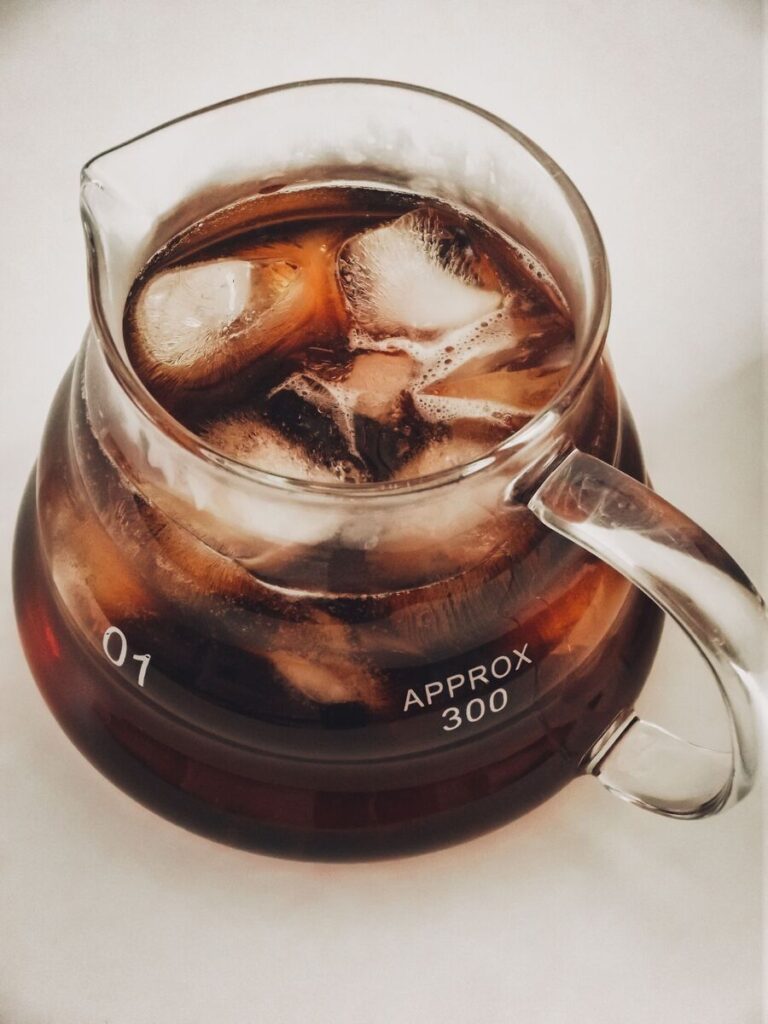
If you enjoy smooth, refreshing coffee but find regular iced coffee too bitter or acidic, cold brew coffee is worth trying. Unlike traditional coffee, which is brewed with hot water and then cooled, cold brew is made by steeping coffee grounds in cold or room-temperature water for several hours.
The result is a smooth, naturally sweet-tasting coffee with a rich flavour and relatively low bitterness. The best part is that you do not need an expensive coffee machine to make cold brew at home. With good-quality coffee beans, water, a suitable container, and a simple filter, you can prepare it easily in your own kitchen.
In this guide, we will explain how to make cold brew coffee at home step by step. You will learn the right cold brew coffee ratio, grind size, steeping time, filtering method, and the best way to serve cold brew.
If you are new to coffee ratios, you can also read our detailed [Coffee to Water Ratio Guide] to understand how changing the amount of coffee and water affects the strength of your brew.
Internal Link: Coffee to Water Ratio Guide
Suggested anchor text: Coffee to Water Ratio Guide
We will also explain what type of coffee works best for cold brew and how freshly ground coffee can improve the final flavour. If you want to understand the difference between whole beans and pre-ground coffee, see our guide on [Coffee Beans vs Ground Coffee].
Internal Link: Coffee Beans vs Ground Coffee
Suggested anchor text: Coffee Beans vs Ground Coffee
Whether you are completely new to cold brew or want to improve your existing recipe, this guide will help you make a smooth and refreshing cup at home.
Recommended Coffee for Cold Brew
For the best results, start with good-quality coffee beans and grind them shortly before brewing. If you are looking for coffee specifically suited to different brewing methods, you can also check our guide to [Best Coffee Beans for Drip Coffee Makers] for more information about choosing coffee beans.
Best Coffee Beans for Drip Coffee Makers
👉 Looking for good coffee beans for your cold brew? Check the latest price on Amazon.
What Is Cold Brew Coffee?
Cold brew coffee is coffee made by steeping coarsely ground coffee in cold or room-temperature water for an extended period instead of using hot water.
When you make cold brew coffee, the grounds usually remain in contact with water for several hours. This slow brewing process extracts different flavours from the coffee compared with traditional hot brewing.
The result is generally a smooth, mellow, and less bitter-tasting coffee that can be served over ice or diluted with water or milk.
Cold Brew vs Regular Iced Coffee
Cold brew and iced coffee may look similar, but they are made differently.
Iced coffee is normally brewed using hot water and then cooled or poured over ice. Cold brew coffee, on the other hand, is brewed without hot water.
This difference in brewing method can have a noticeable effect on flavour. Cold brew is often smoother and less sharp, while iced coffee can have a brighter and more traditional coffee taste.
If you want to explore other brewing techniques, our guide to [Different Coffee Brewing Methods] explains how various methods affect the taste and strength of coffee.
Internal Link: Different Coffee Brewing Methods
Suggested anchor text: Different Coffee Brewing Methods
Is Cold Brew Stronger Than Regular Coffee?
Cold brew can be prepared as either a ready-to-drink coffee or a concentrated brew. A concentrate contains a higher amount of coffee relative to water and is usually diluted before drinking.
This means that the final strength depends largely on the coffee-to-water ratio, brewing time, and how much water or milk you add before serving.
For a detailed explanation of ratios, see our [Coffee to Water Ratio Guide].
Internal Link: Coffee to Water Ratio Guide
Suggested anchor text: Coffee to Water Ratio Guide
Why Make Cold Brew at Home?
One of the biggest advantages of learning how to make cold brew coffee at home is that you can prepare a larger batch and keep it ready in the refrigerator.
It also gives you control over:
- Coffee beans
- Grind size
- Coffee-to-water ratio
- Steeping time
- Strength
- Serving style
Once you find a recipe you like, you can repeat it easily and adjust it according to your taste.
👉 Want better-tasting cold brew? Start with freshly roasted coffee beans. Check the latest options on Amazon.
What You Need to Make Cold Brew Coffee at Home
The good news is that you do not need a special coffee machine to make cold brew coffee at home. A few basic kitchen items are enough to prepare a smooth and refreshing batch.
Here is what you need:
1. Coffee Beans or Ground Coffee
Coffee is the most important ingredient, so try to use good-quality beans. For cold brew, medium to dark roast coffee is often a good starting point because it can produce rich, chocolatey, nutty, and smooth flavours.
You can use whole coffee beans and grind them yourself, or buy pre-ground coffee. However, freshly ground beans usually give you better control over the grind size and freshness.
If you want to understand the difference between the two, read our guide on [Coffee Beans vs Ground Coffee].
Internal Link: Coffee Beans vs Ground Coffee
Suggested anchor text: Coffee Beans vs Ground Coffee
2. Cold or Room-Temperature Water
Use clean, good-quality drinking water. Water makes up most of your cold brew, so its taste can affect the final coffee.
If your tap water has a strong smell or taste, filtered or bottled drinking water can be a better option.
For more information about choosing suitable water for brewing, see our guide to [Best Water for Coffee Makers].
Internal Link: Best Water for Coffee Makers
Suggested anchor text: Best Water for Coffee Makers
3. A Large Jar or Container
A clean glass jar, bottle, or food-safe container works well for making cold brew.
Choose a container that is large enough to hold both the water and coffee grounds while leaving some space for mixing.
A container with a lid is particularly useful because it allows you to cover the coffee while it is steeping in the refrigerator.
4. Coffee Grinder
If you are using whole beans, a coffee grinder is highly recommended.
Cold brew generally requires a coarse grind. A consistent grind helps the coffee extract more evenly and makes filtering easier.
5. A Coffee Filter or Fine Strainer
After steeping, you need to separate the coffee grounds from the brewed coffee.
You can use:
- Paper coffee filters
- A fine-mesh strainer
- Cheesecloth
- A dedicated cold brew filter
- A French press
Paper filters can produce a cleaner cup, while a fine-mesh strainer may allow some fine particles and coffee oils to remain.
6. A Measuring Scale
A kitchen scale is not absolutely necessary, but it can make your recipe much more consistent.
Instead of estimating the amount of coffee with spoons, you can measure the coffee and water accurately. This makes it easier to repeat the same recipe when you find a ratio you like.
Simple Cold Brew Setup
For beginners, your basic setup can be as simple as:
Coffee beans → Grinder → Jar → Water → Steeping → Filter → Glass
That is enough to get started.
👉 Need a coffee grinder or cold brew filter? Check the latest options on Amazon before you start brewing.
Cold Brew Coffee Ratio: How Much Coffee and Water Do You Need?
Getting the cold brew coffee ratio right is one of the most important steps when you are learning how to make cold brew coffee at home.
The amount of coffee you use compared with the amount of water determines how strong or mild your cold brew will taste. There is no single ratio that works for everyone, so it is better to start with a reliable basic ratio and adjust it according to your preference.
Best Starting Ratio for Cold Brew
For beginners, a 1:8 coffee-to-water ratio is a good starting point for a ready-to-drink cold brew.
That means:
100 g coffee + 800 ml water
This produces a relatively strong but drinkable cold brew that can be served over ice or with a small amount of milk.
If you prefer a lighter coffee, you can use a higher amount of water.
| Coffee | Water | Approx. Ratio | Result |
|---|---|---|---|
| 50 g | 400 ml | 1:8 | Small batch |
| 75 g | 600 ml | 1:8 | Medium batch |
| 100 g | 800 ml | 1:8 | Larger batch |
| 125 g | 1,000 ml | 1:8 | Large batch |
For a more detailed explanation of coffee-to-water ratios across different brewing methods, read our [Coffee to Water Ratio Guide].
Internal Link: Coffee to Water Ratio Guide
Suggested anchor text: Coffee to Water Ratio Guide
Cold Brew Concentrate Ratio
Some people prefer making a cold brew concentrate instead of ready-to-drink coffee.
A stronger starting point is around 1:4, such as:
100 g coffee + 400 ml water
The resulting concentrate can then be diluted with water, milk, or ice before drinking.
For example, if the concentrate tastes too strong, you can gradually add water until it reaches the strength you enjoy.
Which Ratio Should Beginners Use?
If this is your first time making cold brew, start with 1:8 rather than making an extremely concentrated batch.
Once you understand how your chosen coffee tastes, you can experiment with:
- 1:10 for a lighter brew
- 1:8 for a balanced starting point
- 1:6 for a stronger brew
- 1:4 for a concentrate
Remember that the final taste is also affected by the coffee beans, grind size, steeping time, water quality, and dilution.
What Grind Size Is Best for Cold Brew?
Cold brew works best with a coarse coffee grind.
The grounds should look noticeably larger than the fine grounds normally used for espresso. A coarse grind allows water to move around the coffee particles while reducing the chance of over-extraction and making the coffee easier to filter.
Avoid using an extremely fine grind. Fine coffee particles can make the cold brew muddy, difficult to filter, and sometimes unpleasantly bitter.
💡 Quick Tip
If you do not have a kitchen scale, you can use measuring spoons as a rough starting point. However, a scale is much more accurate because coffee beans and grounds can vary significantly in weight.
Once you find a ratio that tastes good, write it down. This makes it much easier to make cold brew coffee consistently every time.
👉 Want a consistent coarse grind for cold brew? Check coffee grinders on Amazon.
Step-by-Step: How to Make Cold Brew Coffee at Home
Now that you know the right cold brew coffee ratio and grind size, it is time to prepare the coffee. The process is simple, but a few small details can make a noticeable difference in the final taste.
Follow these steps to make cold brew coffee at home.
Step 1: Measure the Coffee and Water
For a beginner-friendly batch, use:
- 100 g coarsely ground coffee
- 800 ml clean water
- A large glass jar or brewing container
- A coffee filter or fine-mesh strainer
This follows the 1:8 coffee-to-water ratio discussed earlier.
If you want to prepare a smaller batch, simply reduce both ingredients while keeping the same ratio.
Step 2: Grind the Coffee Coarsely
If you are using whole beans, grind them to a coarse consistency.
The grounds should look somewhat similar to coarse sea salt rather than fine powder.
A coarse grind is important because cold brew requires a long contact time between coffee and water. It also makes the final filtering process easier.
Step 3: Add Coffee to the Container
Place the measured coffee grounds into your clean jar or brewing container.
Try to distribute the grounds evenly instead of leaving a large pile at the bottom.
Step 4: Add Water Slowly
Pour 800 ml of water over the coffee grounds.
Pour slowly, making sure that all the grounds become wet. Dry pockets of coffee can result in uneven extraction.
You can gently stir the mixture with a clean spoon to make sure all the grounds are fully saturated.
Do not stir aggressively. A gentle mix is enough.
Step 5: Cover the Container
Put the lid on the container and make sure it is properly covered.
You can steep the coffee at room temperature or in the refrigerator. For beginners, refrigerator steeping is a convenient option because it keeps the brewing environment controlled and allows you to prepare the coffee ahead of time.
Step 6: Let the Coffee Steep
Allow the coffee to steep for approximately 12–18 hours.
A good starting point is around 16 hours.
The exact time can be adjusted depending on your coffee and taste preference:
- 12 hours: lighter and potentially more delicate
- 16 hours: good starting point for many home brewers
- 18 hours: stronger extraction
- 24+ hours: generally unnecessary for a basic recipe and may produce an overly intense or less balanced cup
Remember that grind size, coffee type, water, temperature, and ratio all influence extraction.
Step 7: Filter the Coffee
After steeping, you need to separate the coffee grounds from the liquid.
Place a fine-mesh strainer over another clean container and slowly pour the mixture through it.
For an even cleaner cup, place a paper coffee filter inside the strainer and allow the coffee to pass through slowly.
Do not squeeze the coffee grounds aggressively. Doing so can push more fine particles into the finished brew.
Step 8: Taste and Adjust
Your cold brew is now ready.
Taste a small amount before serving.
If it tastes too strong, add a little cold water.
If it tastes too concentrated or intense, dilute it further with water or milk.
If it tastes too weak, you can reduce the amount of dilution the next time you prepare it.
The goal is not to follow a recipe blindly. Use the basic recipe as your starting point and adjust it according to your preferred flavour.
Step 9: Serve Over Ice
Fill a glass with ice and pour your cold brew over it.
You can drink it black or add:
- Cold milk
- Oat milk
- Almond milk
- A little sugar
- Simple syrup
- Flavoured syrup
For a stronger coffee flavour, use less milk or dilution. For a smoother and creamier drink, add more milk.
☕ Quick Cold Brew Recipe
For easy reference:
100 g coarse coffee + 800 ml water → Steep 12–18 hours → Filter → Dilute if needed → Serve over ice
That is the basic method you need to make cold brew coffee at home.
👉 Want to make cold brew more easily at home? Check coffee grinders, brewing jars, and reusable filters on Amazon.
How to Serve Cold Brew Coffee: 6 Easy Ways
Once you have learned how to make cold brew coffee, the next step is deciding how you want to drink it. Cold brew is naturally versatile, so you can serve it black, diluted with water, or combined with milk and other ingredients.
Here are some easy ways to enjoy homemade cold brew.
1. Cold Brew Over Ice
The simplest option is to pour chilled cold brew directly over ice.
Fill a glass with ice and add your cold brew. If the coffee tastes too strong, add a little cold water.
Simple combination:
Cold brew + ice + cold water
This is a good option if you enjoy a clean coffee flavour without milk or sugar.
2. Cold Brew With Milk
For a smoother and creamier drink, add cold milk to your cold brew.
You can start with approximately:
¾ cup cold brew + ¼ cup milk
Adjust the amount according to your taste.
Regular dairy milk works well, but you can also try oat milk, almond milk, or another milk alternative.
3. Cold Brew With Sweetener
Cold brew can have naturally sweet and smooth flavour notes, but you may still prefer some additional sweetness.
Instead of adding regular sugar directly to very cold coffee, try using:
- Simple syrup
- Honey syrup
- Maple syrup
- Flavoured coffee syrup
Start with a small amount and add more if needed.
4. Vanilla Cold Brew
For a simple flavoured drink, add a small amount of vanilla syrup to your cold brew.
Cold brew + ice + milk + vanilla syrup
This creates a café-style drink without requiring an expensive coffee machine.
5. Cold Brew With Coffee Ice Cubes
Regular ice can dilute your drink as it melts.
A simple solution is to freeze some leftover cold brew in an ice cube tray.
Then use those coffee cubes in your next glass.
Cold brew + coffee ice cubes = less dilution
This is especially useful when you prefer a strong coffee flavour.
6. Cold Brew Tonic
For something different, combine cold brew with chilled tonic water and ice.
The combination creates a refreshing drink with a more unusual flavour profile.
Start with a small amount of tonic water and adjust the proportions according to your preference.
How Strong Should Cold Brew Taste?
There is no single correct strength for cold brew.
If your drink tastes too strong, add water or milk.
If it tastes too weak, reduce the amount of dilution the next time you prepare it.
Remember that the original cold brew coffee ratio also affects the final strength. If you regularly adjust your drink with a large amount of water, consider making a slightly stronger batch next time.
For more information about how different ratios affect coffee strength, you can revisit our [Coffee to Water Ratio Guide].
Internal Link: Coffee to Water Ratio Guide
Suggested anchor text: Coffee to Water Ratio Guide
👉 Want to enjoy café-style cold brew at home? Check reusable coffee glasses, cold brew bottles, and coffee accessories on Amazon.
Best Coffee for Cold Brew: Which Beans Should You Choose?
The coffee beans you choose can make a big difference to the final flavour. If you are learning how to make cold brew coffee, it is worth experimenting with different beans instead of assuming that every coffee will taste the same.
Cold water extracts coffee more slowly than hot water, so certain flavour profiles can work particularly well with this brewing method.
1. Medium Roast Coffee
Medium roast is an excellent starting point for beginners.
It can provide a balance of sweetness, acidity, and body without making the coffee taste overly smoky or bitter.
Depending on the beans, you may notice flavours such as:
- Chocolate
- Caramel
- Nuts
- Dried fruit
- Mild sweetness
If you are unsure which roast to choose, medium roast is a safe option for your first batch.
2. Dark Roast Coffee
Dark roast beans can produce a bold and rich cold brew.
They are often associated with flavours such as:
- Dark chocolate
- Cocoa
- Roasted nuts
- Caramel
- Smoky or roasted notes
If you prefer strong, bold coffee with lower perceived acidity, dark roast may be worth trying.
However, very dark roasted beans can sometimes produce a heavy or bitter-tasting cup, particularly if your recipe is already quite concentrated.
3. Light Roast Coffee
Light roast coffee can also be used for cold brew.
It may highlight brighter and more distinctive flavour notes, including fruit, citrus, floral, or berry characteristics.
However, if you are completely new to cold brew, light roast may require more experimentation with the ratio and steeping time to get the flavour you prefer.
4. Whole Beans vs Pre-Ground Coffee
If possible, buy whole beans and grind them shortly before brewing.
Freshly ground coffee gives you better control over the grind size and can help preserve the coffee’s aroma and flavour.
Pre-ground coffee is more convenient, but you need to make sure it is suitable for a coarse grind.
For a deeper comparison, read our guide on [Coffee Beans vs Ground Coffee].
Internal Link: Coffee Beans vs Ground Coffee
Suggested anchor text: Coffee Beans vs Ground Coffee
5. Single-Origin vs Coffee Blends
Both single-origin coffee and blends can work well for cold brew.
Single-origin coffee comes from a specific geographic origin and may have more distinctive flavour characteristics.
Blends combine beans from different origins and are often designed to create a balanced and consistent flavour.
For your first batch, you do not need to spend a lot of money on specialty coffee. A fresh, good-quality medium or dark roast is enough to start experimenting.
6. Freshness Matters
Coffee beans gradually lose their freshness after roasting. For cold brew, using reasonably fresh beans can help you get better aroma and flavour.
Instead of buying a very large quantity, consider buying a smaller bag that you can finish while it is still reasonably fresh.
If you want to explore coffee beans for other brewing methods, you can also read our guide to [Best Coffee Beans for Drip Coffee Makers].
Internal Link: Best Coffee Beans for Drip Coffee Makers
Suggested anchor text: Best Coffee Beans for Drip Coffee Makers
What Is the Best Coffee for Cold Brew?
There is no single bean that is universally the best for everyone.
For a beginner-friendly starting point, choose:
Medium or medium-dark roast + freshly roasted beans + coarse grind
Once you understand the basic recipe, try different origins and roast levels to discover which flavour profile you enjoy most.
Common Cold Brew Coffee Mistakes to Avoid
Learning how to make cold brew coffee is simple, but beginners often make a few small mistakes that can affect the flavour, strength, and clarity of the final drink.
Here are the most common problems and how to avoid them.
1. Using a Very Fine Grind
One of the most common mistakes is using coffee grounds that are too fine.
Fine grounds can make the coffee difficult to filter and may produce a muddy or overly bitter cup.
Better approach: Use a coarse grind and keep the particle size reasonably consistent.
2. Using the Wrong Coffee-to-Water Ratio
Adding too much coffee can make the brew unnecessarily strong, while too much water can result in weak coffee.
Start with a reliable 1:8 cold brew coffee ratio and adjust it after tasting your first batch.
3. Steeping for Too Little Time
Cold brew requires considerably more time than hot coffee because extraction happens slowly.
If you stop the process too early, the coffee may taste weak or underdeveloped.
Better approach: Start with around 12–18 hours and adjust the time according to your preferred flavour.
4. Steeping for Too Long
More brewing time does not automatically mean better coffee.
Leaving the grounds in the water for an unnecessarily long period can produce a harsh, woody, or overly intense flavour.
Start with a consistent brewing time and change only one variable at a time when experimenting.
5. Not Wetting All the Coffee Grounds
If some grounds remain dry when you add water, those particles will not extract properly.
After adding water, gently stir the mixture to make sure all the grounds are saturated.
6. Using Poor-Quality Water
Coffee is mostly water, so the quality and taste of your water matter.
If your water has a strong chlorine taste or unusual odour, it can negatively affect the final coffee.
Using clean drinking or filtered water can help produce a better-tasting brew.
For more information, see our guide to [Best Water for Coffee Makers].
Internal Link: Best Water for Coffee Makers
Suggested anchor text: Best Water for Coffee Makers
7. Filtering Too Quickly
After steeping, do not rush the filtering process.
Pouring everything through a filter too quickly can allow more fine particles to pass through.
A slow filtration process can produce a cleaner cup, particularly when using a paper coffee filter.
8. Squeezing the Coffee Grounds
It can be tempting to squeeze the grounds to extract every last drop of coffee.
However, aggressive squeezing can push more fine particles and extracted compounds into the finished brew.
Instead, allow the coffee to drain naturally through the filter.
9. Adding Too Much Ice
Ice is useful for serving cold brew, but excessive melting ice can dilute the drink.
If you prefer a stronger coffee flavour, use a reasonable amount of ice or try coffee ice cubes made from leftover cold brew.
10. Changing Too Many Variables at Once
This is an important mistake when experimenting.
If your cold brew tastes too weak, do not simultaneously change the ratio, grind size, steeping time, roast, and water.
Instead, change one variable at a time.
For example:
First batch → 1:8 ratio + coarse grind + 16 hours
If the result is too weak, try slightly increasing the coffee amount in the next batch while keeping everything else the same.
This makes it much easier to understand what actually improved the flavour.
Quick Troubleshooting Guide
| Problem | Possible Cause | What to Try |
|---|---|---|
| Too weak | Too much water or short steeping | Use slightly more coffee or steep longer |
| Too strong | Too much coffee | Dilute with water or milk |
| Too bitter | Very fine grind or excessive extraction | Use coarser grounds and review steeping time |
| Muddy | Fine particles | Use a coarser grind and better filtration |
| Too acidic | Coffee choice or extraction | Try a different roast or adjust brewing |
| Too diluted | Too much water/ice | Reduce dilution or use coffee ice cubes |
The key is to treat your first batch as a starting point. Once you understand how each variable affects the flavour, you can easily customise your recipe.
Cold Brew vs Iced Coffee: What’s the Difference?
Cold brew and iced coffee dono cold, refreshing coffee drinks hain, lekin inhe banane ka process kaafi different hota hai. Isi wajah se dono ka taste, strength, aroma aur overall drinking experience bhi alag ho sakta hai.
Agar aap decide nahi kar pa rahe hain ki cold brew vs iced coffee mein se kya choose karein, to sabse pehle inke brewing methods ko samajhna useful hai.
Cold Brew Coffee
Cold brew mein coffee grounds ko cold ya room-temperature water mein several hours tak steep kiya jata hai. Is process mein hot water ka use nahi hota.
Typical process:
Coarse coffee grounds → Cold water → 12–18 hours steeping → Filtering → Cold brew
Is slow brewing process se generally ek smooth, mellow aur less sharp-tasting coffee milti hai.
Iced Coffee
Traditional iced coffee mein coffee ko pehle hot water se brew kiya jata hai. Uske baad coffee ko ice ke upar serve kiya jata hai ya chill karke cold drink banayi jati hai.
Typical process:
Ground coffee → Hot water → Brewing → Cooling → Ice → Iced coffee
Isliye iced coffee ka preparation time usually cold brew se kaafi kam hota hai.
For more information about different brewing techniques, you can also read our guide on [Different Coffee Brewing Methods].
Cold Brew vs Iced Coffee: Quick Comparison
| Feature | Cold Brew | Iced Coffee |
|---|---|---|
| Brewing water | Cold/room-temperature | Hot |
| Brewing time | Usually 12–18 hours | Usually a few minutes |
| Taste | Smooth, mellow, naturally sweet-tasting | Brighter, more traditional coffee flavor |
| Acidity perception | Often perceived as less acidic | Can taste brighter or more acidic |
| Preparation | Requires advance planning | Quick to prepare |
| Best for | Make-ahead coffee | Quick cold coffee |
| Serving | Ice, milk or diluted | Usually served over ice |
| Batch preparation | Easy | Usually prepared fresh |
Which Tastes Better?
This depends completely on your personal preference.
If you prefer a smooth, mellow and less sharp coffee, cold brew may suit you better. It is also easy to prepare in a larger batch and keep refrigerated for later servings.
If you enjoy a brighter and more traditional coffee flavor, iced coffee may be a better option. Because the coffee is brewed hot, you can prepare it whenever you want a cold coffee without waiting overnight.
The type of beans also makes a noticeable difference. Roast level, freshness and grind size can change the final flavor considerably.
You can learn more about choosing coffee in our guide to [Coffee Beans vs Ground Coffee].
Is Cold Brew Stronger Than Iced Coffee?
Not necessarily.
Cold brew is often served as a concentrate and then diluted with water or milk, which can make it appear very strong. However, the actual caffeine content depends on factors such as:
- Amount of coffee used
- Coffee-to-water ratio
- Brewing method
- Brewing time
- Serving size
- Whether the drink is diluted
Therefore, you should not assume that every cold brew automatically contains more caffeine than iced coffee.
If you are making cold brew at home, controlling the coffee-to-water ratio is one of the easiest ways to control its strength.
Which One Is Faster to Make?
Iced coffee wins when it comes to speed.
You can brew coffee using your normal hot brewing method and pour it over ice within minutes.
Cold brew requires much more planning because the coffee needs several hours of steeping. However, the advantage is that you can prepare a batch once and have cold coffee ready in the refrigerator for later servings.
Which One Is Better for Beginners?
Both are beginner-friendly, but they suit different situations.
Choose iced coffee if you want:
- Coffee ready within minutes
- A familiar coffee taste
- No overnight preparation
- A drink made fresh whenever you want it
Choose cold brew if you want:
- Smooth and mellow coffee
- Make-ahead preparation
- Easy batch brewing
- A convenient drink ready in the refrigerator
Cold Brew vs Iced Coffee: Which Should You Choose?
The simple answer is:
Choose cold brew if you value smoothness, convenience and make-ahead preparation.
Choose iced coffee if you want a quick cold coffee with a brighter, freshly brewed flavor.
There is no universal winner in the cold brew vs iced coffee comparison. Both are excellent options, and your choice mainly depends on your taste, available time and preferred brewing style.
For cold brew beginners, a good starting point is to use fresh coffee, a coarse grind and a consistent coffee-to-water ratio. Once you understand these basics, you can easily adjust the recipe to match your preferred strength and flavor.
Coffee Brewing Temperature Guide — useful for understanding how brewing temperature affects coffee extraction.
How to Adjust Cold Brew Strength and Taste
One of the biggest advantages of making cold brew at home is that you can easily adjust the strength and flavor according to your preference. If your first batch tastes too strong, too weak, bitter, watery, or simply not balanced, you usually do not need to start from scratch.
Small changes in the coffee-to-water ratio, grind size, steeping time, dilution, and coffee beans can make a noticeable difference.
1. If Your Cold Brew Is Too Strong
If your cold brew tastes extremely concentrated or heavy, the easiest solution is to dilute it with water or milk.
Start by adding a small amount of cold water, such as 30–50 ml, and taste again. Continue gradually until you reach the strength you like.
For example:
100 ml strong cold brew + 30–50 ml water → taste → adjust further if needed
If you are making a concentrate, dilution is actually expected. You can also use milk or oat milk instead of water for a creamier drink.
For a detailed explanation of coffee ratios, see our [Coffee to Water Ratio Guide].
2. If Your Cold Brew Is Too Weak
A weak cold brew can usually be improved by changing the recipe in your next batch.
Try one of these adjustments:
- Increase the amount of coffee.
- Use a slightly lower coffee-to-water ratio.
- Make sure all the coffee grounds are completely saturated.
- Check whether your steeping time is long enough.
- Use freshly roasted coffee beans.
Avoid immediately making the grind extremely fine. Cold brew generally works best with a coarse grind, and changing the grind too aggressively can make filtering difficult and may produce a muddy cup.
3. If Your Cold Brew Tastes Bitter
Bitterness can sometimes come from an overly aggressive extraction or from the particular coffee beans being used.
Try:
- Using a coarser grind.
- Reducing the steeping time.
- Avoiding unnecessarily long steeping.
- Trying a different roast or coffee bean.
- Filtering the coffee properly.
If you are currently steeping for 18 hours, try around 14–16 hours in your next batch and compare the result.
Remember that taste is personal. A coffee that tastes pleasantly strong to one person may taste bitter to another.
4. If Your Cold Brew Tastes Too Acidic or Sharp
Cold brew is often described as smooth, but that does not mean every batch will taste low-acid or mellow.
If your drink tastes too sharp or bright, try changing the coffee beans first. A medium or medium-dark roast can be a useful starting point if you prefer chocolate, caramel and nutty flavors.
You can also experiment with:
- A different coffee origin
- A different roast level
- A slightly longer or shorter steeping time
- A different coffee-to-water ratio
Our guide on [Coffee Beans vs Ground Coffee] can also help you understand how coffee freshness and form can affect your brewing results.
5. If Your Cold Brew Tastes Watery
Watery cold brew is often caused by too much dilution rather than the brewing process itself.
If you have already filtered the coffee, try serving a smaller amount of water or milk with it.
For example:
100 ml cold brew + 100 ml water
may taste much lighter than:
100 ml cold brew + 30 ml water
You can also use coffee ice cubes instead of regular ice. As the cubes melt, they add less plain-water dilution to the drink.
6. If Your Cold Brew Tastes Too Heavy
If your cold brew feels thick, intense or overpowering, reduce the concentration.
Try:
- Adding more water.
- Adding milk.
- Using a lighter roast.
- Using a less concentrated recipe in the next batch.
Changing only one factor at a time makes it easier to understand what actually improved the flavor.
7. Adjust the Taste Without Changing Everything
A common beginner mistake is changing the coffee beans, ratio, grind size and steeping time all at once.
This makes it difficult to know which change affected the final cup.
Instead, use a simple approach:
Keep the beans the same → change one variable → taste → record the result → make the next adjustment.
For example, if your first batch used:
100g coffee + 800ml water + coarse grind + 16 hours
then keep everything the same and try 14 hours next time.
If that improves the flavor, you have learned something useful about your preferred brewing time.
Cold Brew Adjustment Cheat Sheet
| Problem | Try This |
|---|---|
| Too strong | Add water or milk |
| Too weak | Increase coffee or reduce water |
| Too bitter | Coarser grind or shorter steep |
| Too sharp | Try a different roast/bean |
| Too watery | Reduce dilution |
| Too heavy | Dilute or use a lighter roast |
| Muddy | Use a coarser grind and better filtration |
| Not flavorful enough | Try fresher beans |
Keep a Simple Brewing Note
If you regularly make cold brew at home, keeping a small note of your recipe can be surprisingly helpful.
Record:
- Coffee brand or bean
- Roast level
- Amount of coffee
- Amount of water
- Grind size
- Steeping time
- Dilution
- Your taste rating
After two or three batches, you may start to identify exactly what combination you prefer.
This is one reason homemade cold brew can become better over time—you are not simply following a fixed recipe; you are gradually creating a recipe that matches your own taste.
How Long Does Cold Brew Coffee Last in the Refrigerator?
If you make a large batch of cold brew coffee, you may want to store it in the refrigerator and enjoy it over several days. Proper storage is important because the flavor can gradually change, especially after the coffee has been exposed to air.
So, how long does cold brew coffee last?
A properly filtered cold brew should generally be treated as a short-term refrigerated drink rather than something to store for a long period. For the best flavor, it is better to make a manageable batch and consume it within several days.
Store Cold Brew in an Airtight Container
After filtering your cold brew, transfer it into a clean, airtight glass bottle or container.
Avoid leaving the coffee in an open jar because exposure to air can gradually affect its aroma and flavor.
A good storage setup is:
Filtered cold brew → Clean airtight bottle → Refrigerator → Pour only what you need
Keeping the container closed also helps prevent the coffee from absorbing strong smells from other foods in the refrigerator.
Should You Store Cold Brew Concentrate or Ready-to-Drink Coffee?
Both options can work.
Cold Brew Concentrate
If you make a concentrated cold brew, store the concentrate separately and dilute each serving when you are ready to drink it.
For example:
100 ml concentrate + 50–100 ml water or milk
The exact amount depends on how strong you like your coffee.
This approach can be convenient because you can change the strength of every serving instead of making the entire batch the same strength.
Ready-to-Drink Cold Brew
You can also dilute the entire batch immediately after filtering.
This is convenient if you already know your preferred strength and want a grab-and-drink coffee in the refrigerator.
Do Not Add Milk to the Entire Batch
If you plan to store cold brew for several servings, it is better to keep the coffee separate from milk.
Instead of:
Cold brew + milk → store together
try:
Cold brew → refrigerate → add milk when serving
This gives you more flexibility and avoids having to store a milk-based coffee mixture for several days.
Can You Freeze Cold Brew?
Yes, you can freeze cold brew in a suitable food-safe container.
One particularly useful method is making cold brew ice cubes.
Pour cold brew into an ice cube tray and freeze it. When you serve your coffee, use these coffee cubes instead of regular ice.
As they melt, they add coffee rather than plain water, helping reduce the watery taste that can happen with melting ice.
How Can You Tell If Cold Brew Has Gone Bad?
Do not rely only on a specific number of days. Storage conditions, cleanliness, ingredients and refrigerator temperature can all affect how long a homemade drink remains suitable.
Before drinking stored cold brew, check for obvious signs of spoilage.
Discard it if you notice:
- Unusual or unpleasant odor
- Visible mould
- Strange appearance
- Unexpected fermentation-like changes
- A clearly spoiled taste
When in doubt, it is safer to throw it away rather than drink questionable coffee.
Tips for Better Cold Brew Storage
Follow these simple habits:
- Use a clean storage container.
- Filter the coffee properly before storing.
- Keep it refrigerated.
- Use an airtight bottle or container.
- Avoid repeatedly leaving the bottle outside the refrigerator.
- Add milk only when serving.
- Make smaller batches if you do not drink cold brew regularly.
- Label the container with the brewing date if you often make multiple batches.
For more information about maintaining clean coffee equipment, see our guide on [How to Clean a Coffee Maker Properly at Home].
Best Storage Method at a Glance
| Storage Method | Convenience | Best Use |
|---|---|---|
| Airtight bottle | Excellent | Everyday refrigerated cold brew |
| Glass jar with lid | Good | Small homemade batches |
| Concentrate | Excellent | Adjusting strength per serving |
| Ready-to-drink | Excellent | Grab-and-drink coffee |
| Cold brew ice cubes | Good | Preventing dilution |
The easiest approach for most beginners is simple: filter your cold brew properly, transfer it to a clean airtight container, refrigerate it, and enjoy it within a few days for the best quality.
How to Clean a Coffee Maker Properly at Home
Is Cold Brew Healthier Than Regular Coffee?
Cold brew is often promoted as a “healthier” alternative to regular coffee, but the reality is a little more nuanced. Cold brew is still coffee, so its nutritional and caffeine profile depends on the beans, brewing method, serving size, and what you add to the drink.
Rather than calling one method universally healthier, it is better to understand how cold brew compares with regular coffee.
Does Cold Brew Have Fewer Calories?
Plain black cold brew is naturally very low in calories, just like plain black brewed coffee.
The calorie content can increase significantly when you add:
- Sugar
- Flavored syrups
- Cream
- Sweetened milk
- Whipped cream
- Other high-calorie additions
So if you are trying to keep your drink simple, unsweetened cold brew with water or ice is a relatively low-calorie option.
Is Cold Brew Less Acidic?
Cold brew is often described as tasting smoother and less acidic than hot-brewed coffee.
However, “less acidic” can be misleading if it is taken to mean that cold brew always has a dramatically lower pH. The perceived acidity and the measurable chemical acidity of coffee are not exactly the same thing.
The smoother taste of cold brew can make it more comfortable for people who find some hot-brewed coffees too sharp or bright.
If you are sensitive to coffee, however, your personal response matters more than a general claim about the brewing method.
Does Cold Brew Have More Caffeine?
Cold brew does not automatically have more caffeine than regular coffee.
Caffeine depends on several factors, including:
- Amount of coffee grounds used
- Coffee-to-water ratio
- Type of coffee beans
- Brewing method
- Serving size
- Whether the cold brew is diluted
A cold brew concentrate can contain a high amount of caffeine per volume because it uses a relatively high amount of coffee. But once it is diluted, the caffeine concentration of the final drink can be very different.
Therefore, when comparing cold brew with regular coffee, always consider the actual serving size and recipe, rather than assuming that one brewing method is always higher in caffeine.
Is Cold Brew Better for People Who Don’t Like Bitter Coffee?
It can be.
Cold brew is commonly associated with a smoother and less sharp flavor profile. This can make it appealing to people who find some hot-brewed coffee too bitter or acidic.
However, bitterness is affected by much more than temperature.
Your:
- Coffee beans
- Roast level
- Grind size
- Coffee-to-water ratio
- Steeping time
- Filtration
can all influence the final taste.
For example, using a very dark roast and steeping it for too long may still produce a heavy or unpleasant drink.
Is Cold Brew Better Than Hot Coffee?
There is no universal winner.
Cold brew may be a better choice if you enjoy:
- Smooth, chilled coffee
- Make-ahead preparation
- A less sharp-tasting drink
- Coffee served over ice
- Milk-based cold coffee
Hot coffee may be better if you prefer:
- Freshly brewed coffee
- Strong aroma
- A warm drink
- Faster preparation
- Traditional hot-brewing methods
Your overall coffee routine matters more than simply choosing one brewing method.
What Makes Cold Brew a Better Choice?
For many people, the biggest advantage of cold brew is convenience rather than health.
You can prepare a batch in advance, refrigerate it and quickly make a drink whenever you want.
You can also control the final drink by adjusting:
Coffee → Water → Steeping time → Dilution → Milk/Sweetener
This makes homemade cold brew particularly useful for people who enjoy experimenting with coffee.
How to Make Cold Brew a Simpler Drink
If you want a straightforward cold brew, keep the recipe simple:
Cold brew + ice + water
or:
Cold brew + ice + unsweetened milk
This allows the coffee’s natural flavor to remain the main focus.
If you add sugar or flavored syrups, the drink can still be enjoyable, but the nutritional profile will obviously be different.
Bottom Line
Cold brew can be a great part of a balanced coffee routine, but it should not automatically be considered “healthier” than every other type of coffee.
The biggest factors are often how much coffee you drink and what you add to it.
For a simple option, homemade cold brew served without excessive sugar or high-calorie additions is an easy and refreshing choice.
Different Coffee Brewing Methods
Frequently Asked Questions
How long does it take to make cold brew coffee?
Cold brew usually needs around 12–18 hours of steeping. A good starting point is approximately 16 hours. You can adjust the time depending on how strong and flavorful you want the coffee.
What is the best ratio for cold brew coffee?
A good starting ratio for ready-to-drink cold brew is 1:8, such as 100g of coarse coffee with 800ml of water. If you want a concentrate, you can use a stronger ratio such as 1:4 and dilute it before drinking.
Can I make cold brew with regular ground coffee?
Yes, you can. However, a coarse grind is generally easier to filter and works well for cold brew. Very fine coffee grounds can make the drink muddy and difficult to filter.
Can I make cold brew without a coffee grinder?
Yes. You can use good-quality pre-ground coffee, preferably one that is ground coarsely for cold brew. However, grinding fresh beans immediately before brewing gives you more control over grind size and freshness.
What is the best coffee for cold brew?
There is no single best coffee for everyone. Medium and medium-dark roasted beans are good starting points because they can produce balanced chocolate, caramel and nutty flavors. You can also experiment with light roasts if you prefer brighter and fruitier coffee.
Can I use hot water to make cold brew?
Traditional cold brew is made using cold or room-temperature water rather than hot water. If you brew the coffee with hot water and then cool it, you are essentially making iced coffee rather than traditional cold brew.
Why is my cold brew bitter?
A bitter cold brew can result from several factors, including an unsuitable grind size, excessive steeping, a dark roast, or an unbalanced recipe.
Try using a coarser grind, reducing the steeping time, or experimenting with a different coffee bean.
Why does my cold brew taste weak?
If your cold brew tastes weak, try increasing the amount of coffee or reducing the amount of water in your next batch. You should also make sure that all the coffee grounds are properly saturated during brewing.
Can I drink cold brew without diluting it?
Yes, but it depends on the recipe.
If you made ready-to-drink cold brew using a moderate coffee-to-water ratio, you may be able to drink it directly over ice.
If you made a concentrate, you will usually want to dilute it with water, milk or another preferred liquid.
Can I add milk to cold brew?
Absolutely. Cold brew works well with regular milk as well as alternatives such as oat or almond milk.
Add milk when serving rather than mixing it into the entire batch if you plan to store the coffee for several days.
Is cold brew stronger than regular coffee?
Not necessarily. The strength and caffeine content depend on the amount of coffee used, brewing ratio, serving size and dilution.
A concentrated cold brew can be very strong, but the final drink may become much lighter after adding water or milk.
Is cold brew less acidic than iced coffee?
Cold brew is often perceived as smoother and less sharp than some hot-brewed coffees, but it is better not to assume that every cold brew has a dramatically lower pH.
The coffee beans, roast level and brewing recipe also influence how acidic or bright the drink tastes.
Can I make cold brew with instant coffee?
You can make a cold coffee drink using instant coffee, but it is not the same as traditional cold brew.
Traditional cold brew involves steeping ground coffee in water for several hours, followed by filtration.
How long does homemade cold brew last?
Properly filtered homemade cold brew should be stored in a clean, airtight container in the refrigerator and is best treated as a short-term refrigerated drink.
For the best flavor, make a manageable batch and consume it within several days. Always discard it if you notice mould, an unusual smell or other obvious signs of spoilage.
Can I make cold brew without a special cold brew maker?
Yes. You do not need a dedicated cold brew machine.
A simple setup can include:
Jar + coarse coffee grounds + water + filter
This is enough to make cold brew at home.
What grind size is best for cold brew?
A coarse grind is generally the best starting point. It helps make filtration easier and reduces the amount of fine sediment in the finished drink.
For more information, see our guide on [How to Grind Coffee Beans Correctly: The Complete Beginner’s Guide].
Is cold brew healthier than regular coffee?
Cold brew should not automatically be considered healthier than regular coffee. Both are coffee drinks, and their overall nutritional profile depends heavily on serving size and what you add.
Plain, unsweetened cold brew is naturally low in calories, while adding sugar, syrups, cream or sweetened milk can significantly increase calories.
What is the easiest way to make cold brew at home?
The easiest method is:
100g coarse coffee + 800ml water → steep for 12–18 hours → filter → refrigerate → serve over ice.
Once you become comfortable with this basic recipe, you can adjust the ratio, steeping time and dilution according to your taste.
Internal Link: [Coffee to Water Ratio Guide: The Perfect Coffee Ratio for Every Brewing Method]
Final Verdict: How to Make Cold Brew Coffee at Home
Learning how to make cold brew coffee at home is much easier than it may seem. You do not need an expensive coffee machine or complicated equipment. With good coffee beans, coarse grinding, clean water, a suitable container and a reliable filter, you can make smooth and refreshing cold brew in your own kitchen.
The most important thing is to start with a simple recipe and then adjust it according to your taste.
Quick Cold Brew Recipe
If you want a simple starting recipe, use:
Ingredients:
- 100g freshly roasted coffee beans
- 800ml clean water
- Large jar or cold brew container
- Coffee grinder
- Fine-mesh strainer or coffee filter
Method:
- Grind the coffee beans to a coarse consistency.
- Add the coffee grounds to a clean jar.
- Slowly add 800ml of water.
- Stir gently to make sure all grounds are wet.
- Cover the container.
- Steep for approximately 12–18 hours.
- Filter the coffee carefully.
- Refrigerate the filtered cold brew.
- Serve over ice.
- Add water or milk if the coffee is too strong.
A good starting point is 100g coffee + 800ml water + approximately 16 hours of steeping.
You can then adjust the recipe based on your taste.
Cold Brew Recipe Cheat Sheet
| You Want | Try This |
|---|---|
| Balanced cold brew | 1:8 ratio |
| Stronger coffee | More coffee or less water |
| Concentrate | Around 1:4 ratio |
| Smoother taste | Medium/medium-dark roast |
| Cleaner cup | Coarse grind + good filtration |
| Less dilution | Coffee ice cubes |
| Creamier drink | Add milk or oat milk |
Key Takeaways
Before you start making your own cold brew, remember these simple points:
- Use fresh coffee beans whenever possible.
- Choose a coarse grind.
- Start with a 1:8 coffee-to-water ratio.
- Make sure all the grounds are properly saturated.
- Steep for around 12–18 hours.
- Filter the coffee carefully.
- Refrigerate the finished coffee in a clean, airtight container.
- Dilute concentrate before drinking.
- Adjust one variable at a time when experimenting.
- Do not assume that every cold brew has more caffeine than regular coffee.
- Keep added sugar and syrups under control if you want a simpler, lower-calorie drink.
If you are still learning about coffee ratios, our [Coffee to Water Ratio Guide] is a useful next step.
Final Answer: Is Homemade Cold Brew Worth It?
Yes.
Homemade cold brew is inexpensive, easy to customize and convenient once you get your preferred recipe right. The biggest advantage is that you can control almost everything—from the coffee beans and grind size to the brewing ratio and final dilution.
You also do not need a dedicated cold brew machine to get started.
A simple jar, coarse coffee grounds, water and a good filter are enough for your first batch.
Once you understand the basic method, you can experiment with different beans, roast levels, ratios and serving styles until you find your ideal cold brew.
Ready to Make Cold Brew at Home?
If you have been searching for how to make cold brew coffee, start simple rather than buying lots of equipment.
A good coffee grinder + fresh coffee beans + a suitable brewing container + reliable filter will give you everything you need to begin.
- [Best Coffee Grinder in India]
- [Best Coffee Beans for AeroPress]
- [Coffee to Water Ratio Guide]
- [How to Grind Coffee Beans Correctly]
- [How to Clean a Coffee Maker Properly at Home]
One-Line Recipe
100g coarse coffee + 800ml water → steep 12–18 hours → filter → refrigerate → dilute if needed → serve over ice.