

Imagine this.
It is early morning. You walk into your kitchen, grind a few coffee beans, pour hot water over them, and within minutes your room is filled with that familiar coffee aroma.
It feels completely normal today.
But have you ever wondered where that coffee actually came from?
The beans in your kitchen are part of a story that began centuries ago, travelled across continents, passed through ancient trade routes, became part of religious and social life, reached India, and eventually found its way into modern homes and cafés.
That is what makes coffee history so fascinating.
Coffee is not simply a drink. It is the result of a long journey involving farmers, traders, travellers, religious communities, coffeehouses, and generations of people who changed the way coffee was grown, roasted, brewed, and enjoyed.
And there is an interesting connection for Indian coffee lovers too.
India has its own famous coffee story involving Baba Budan, Yemen, and the hills of Karnataka. According to long-standing tradition, Baba Budan brought seven coffee seeds from Yemen and planted them in the hills of present-day Chikkamagaluru. The tradition is widely associated with the beginning of coffee cultivation in India, although some details of the story are regarded as legend rather than independently verified history.
So, where did coffee begin?
And how did it travel from African highlands to your morning cup?
Let’s take the journey step by step.
Quick Answer: Where Did Coffee Come From?
The coffee plant is native to Ethiopia, particularly the highlands of southwestern Ethiopia.
However, the story of coffee as a cultivated crop and brewed beverage developed further in Yemen, where coffee drinking is documented from around the 15th century. From there, coffee spread throughout the Middle East and eventually to Europe, Asia, and the Americas.
The simple journey looks like this:
Ethiopia → Yemen → Middle East → Europe → Asia & Americas → Modern Coffee Culture
And India’s chapter in this story begins with the traditional account of Baba Budan bringing coffee seeds from Yemen to Karnataka in the 17th century.
Coffee Tip: The next time you drink coffee, remember that the flavour in your cup is the final stage of a journey that began long before modern coffee machines existed.
What Makes the History of Coffee So Interesting?
The history of coffee is not just about dates.
It is about how a wild plant became one of the world’s most loved beverages.
Over time, people discovered different ways to:
- grow coffee plants
- process coffee cherries
- roast coffee beans
- grind them
- brew them
- trade them
- and eventually enjoy them in completely different cultures
Even today, the way you prepare your coffee can dramatically change its flavour.
For example, a coffee bean can be brewed using a French Press, AeroPress, drip coffee maker, espresso machine, or cold-brew method, and each method can create a very different cup.
If you want to understand those differences, see our guide to Different Coffee Brewing Methods.
And once you understand the journey of coffee from bean to cup, topics such as roasting and grinding suddenly become much more interesting.
For example, you can explore how green coffee beans are transformed during roasting in our guide: How Coffee Beans Are Roasted: From Green Beans to Perfect Coffee.
You can also learn why freshly ground coffee matters in How to Grind Coffee Beans Correctly.
The Big Picture: From a Wild Plant to a Global Drink
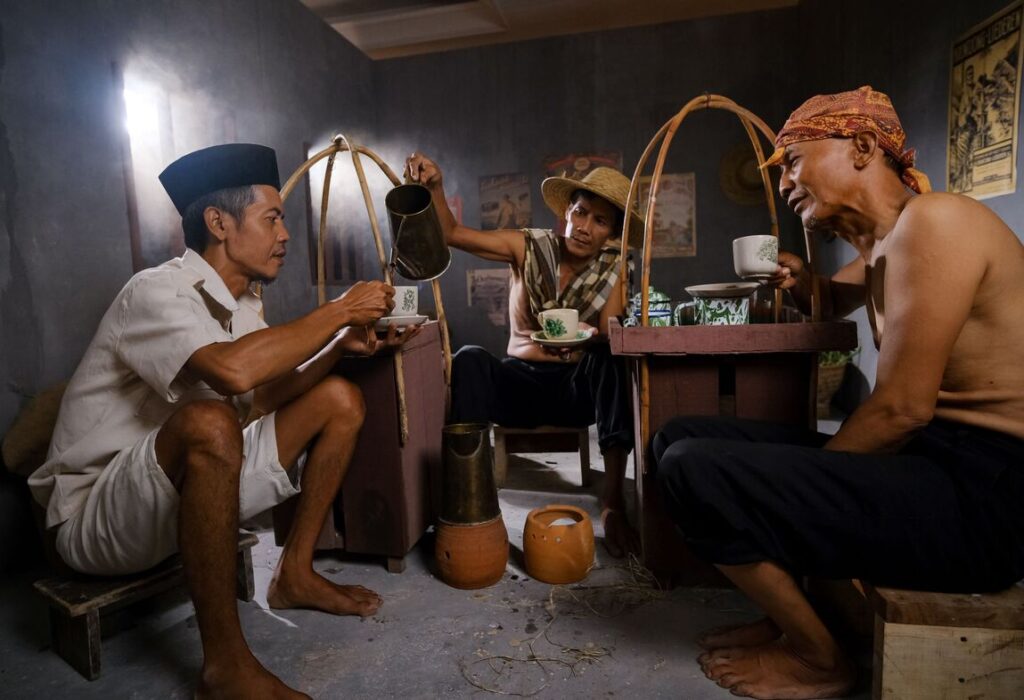
One of the most important things to understand about coffee history is that there is a difference between the origin of the coffee plant and the origin of coffee drinking.
The coffee plant’s natural home is associated with Ethiopia. Modern genetic research also supports Ethiopia as the origin of Coffea arabica.
But that does not mean people in ancient Ethiopia were drinking the same espresso, cappuccino, or filter coffee that we know today.
The beverage developed through a much longer process.
Coffee moved across the Red Sea into Yemen, where cultivation and coffee drinking became established. From there, it became increasingly connected with trade and social life.
Eventually, coffee reached other parts of the world.
And as it travelled, people changed it.
Different countries developed different:
Roasting styles → Brewing methods → Serving traditions → Coffee cultures
That is why coffee today can look completely different depending on where you are.
A South Indian filter coffee, an Italian espresso, a Turkish-style coffee, a French Press, and a modern cold brew may all start with coffee beans—but the final experience can be very different.
☕ From Bean to Cup
Here is the simplest way to understand the entire journey:
Coffee Plant
↓
Coffee Cherry
↓
Coffee Seed / Green Bean
↓
Roasting
↓
Grinding
↓
Brewing
↓
Your Cup of Coffee
Every stage matters.
The roast affects flavour and aroma.
The grind size affects extraction.
The amount of coffee and water affects strength.
And the brewing method determines how those flavours finally reach your cup.
If you want to understand one of these stages in more detail, our Coffee to Water Ratio Guide explains how the balance between coffee and water affects the final brew.
A Story That Starts in Ethiopia
Now let’s go back to the beginning.
Before coffee became a global industry, before coffeehouses appeared in major cities, and long before anyone was searching online for the best coffee maker, coffee was simply a plant growing in the highlands of Ethiopia.
This is where the story becomes especially interesting.
There is a famous Ethiopian story about a goat herder named Kaldi.
According to the popular legend, Kaldi noticed that his goats became unusually energetic after eating red coffee cherries. Curious about what had happened, the story says he shared the discovery with monks, who eventually found ways to use the plant.
It is a wonderful story—and it has been repeated countless times in coffee culture.
But there is an important distinction:
The Kaldi story is a legend, not proven historical fact.
There is no reliable contemporary evidence proving that Kaldi was the person who discovered coffee.
So, when discussing coffee history, it is better to enjoy the story while clearly identifying it as folklore rather than presenting it as established fact.
What we can say with much greater confidence is that Ethiopia is the botanical homeland of Arabica coffee, and the plant later travelled across the Red Sea toward Yemen.
And that journey changed coffee forever.
Next, we follow coffee across the Red Sea to Yemen—where coffee became much more than a plant.
☕ Coffee Reaches Yemen: Where the Journey Really Took Off
Ethiopia may be the natural home of the coffee plant, but the story of coffee as a cultivated crop took a major turn after it crossed the Red Sea into Yemen.
And this is where coffee history becomes much more than a story about a plant.
It becomes the story of a beverage.
🌊 From Ethiopia to Yemen
At some point in history, coffee plants moved from the forests of southwestern Ethiopia across the Red Sea toward Yemen.
Historical and genetic evidence strongly connects Yemen with the early development and spread of cultivated Arabica coffee. World Coffee Research describes Yemen as the secondary dispersal centre for Arabica coffee—meaning coffee originated in Ethiopia but spread to the wider world largely through Yemen.
The environment was very different from the lush Ethiopian highlands.
Yemen was hotter and considerably drier.
Farmers therefore had to grow coffee under completely different conditions.
Over generations, the plants that survived and produced well in Yemen were selected and cultivated. Eventually, coffee became an agricultural crop rather than simply a wild plant.
And that changed everything.
🕌 Coffee Becomes Part of Everyday Life
By around the 15th century, coffee was being cultivated and consumed in Yemen.
Sufi communities are particularly important in the early history of coffee drinking. Coffee was valued because it could help people remain alert during long periods of prayer and religious activity. Historical records place coffee consumption in Yemen around the middle of the 15th century.
Think about how different this was from the way we drink coffee today.
There were:
❌ No espresso machines
❌ No automatic drip coffee makers
❌ No electric grinders
❌ No capsules
❌ No fancy café menus
Yet people were already discovering something that modern coffee lovers still appreciate:
Coffee can change the way you experience a long day.
It can make you feel more alert, keep conversations going, and become part of a social routine.
That basic idea has survived for centuries.
🏠 The Rise of Coffeehouses
As coffee drinking became more established, coffeehouses began appearing in Yemen and later in other parts of the Middle East.
These places were not simply somewhere to grab a quick cup before work.
They became social spaces.
People could meet friends, discuss news, talk business, listen to music, play games, and spend time together.
In other words, coffee was becoming part of coffee culture.
And that is one of the most important developments in the history of coffee.
The drink was no longer just something you consumed.
It was becoming an experience.
🌍 Yemen Becomes the Gateway for Coffee
Yemen’s role in coffee history became even more important because coffee began moving beyond the Arabian Peninsula.
For centuries, Yemen played a central role in the cultivation and trade of coffee.
Coffee grown around Yemen’s mountainous regions eventually became famous outside the region as well.
In fact, the name Mocha is connected to the Yemeni port of Al-Makha (Mocha), which became an important centre for coffee trade.
This is also why you may still hear the word Mocha associated with coffee today.
Interestingly, the modern café drink called a mocha is not simply the same thing as traditional Yemeni coffee. The modern term developed separately through the historical association of coffee with the port and its trade.
🌱 Yemen Changed the Coffee Plant Forever
Here is a fascinating part of the story that is often missed.
Coffee did not simply travel from Ethiopia to Yemen and then remain unchanged.
Yemen became an important stage in the evolution and spread of cultivated Arabica coffee.
Researchers have found that coffee populations from Yemen are genetically connected to many of the Arabica varieties cultivated around the world today.
Later, coffee seeds moved from Yemen to places including India, Indonesia, and eventually other parts of the world.
Some of today’s famous Arabica genetic groups, including Typica and Bourbon, trace their historical movement through these routes.
So when you buy a bag of Arabica coffee today, you are looking at the result of a journey that crossed borders many centuries ago.
☕ Coffee History in One Simple Line
You can remember this part of the journey like this:
Ethiopia = Origin of Arabica
⬇️
Yemen = Early cultivation & major centre of spread
⬇️
Middle East = Coffee culture & coffeehouses
⬇️
World = Global coffee trade
This is why saying simply “coffee was invented in Yemen” would be misleading.
A better explanation is:
Arabica coffee originated in Ethiopia, while Yemen played a crucial role in cultivating coffee and spreading it to the wider world.
That distinction makes the history of coffee much easier to understand.
🇮🇳 And Then Coffee Came to India…
Now comes one of the most interesting chapters for Indian coffee lovers.
How did a plant originating in Ethiopia and cultivated in Yemen eventually reach India?
The answer leads us to a famous name in Indian coffee history:
Baba Budan
According to the traditional account, Baba Budan brought coffee seeds from Yemen to India around 1670.
Modern genetic research provides evidence that early coffee introductions from Yemen did indeed reach India in the 17th century, and Indian varieties such as Coorg and Kent are genetically connected to the Bourbon-related lineage.
This is where the global journey of coffee starts becoming an Indian story.
And it is a story worth knowing.
Next: Baba Budan, seven coffee seeds, and how coffee took root in India.
Baba Budan and the Beginning of Coffee in India
Coffee had already travelled from Ethiopia to Yemen and was becoming an important part of Middle Eastern culture. But its journey did not stop there.
One of the most fascinating chapters in coffee history began when coffee seeds travelled from Yemen to India.
And behind that story is a name that is still closely connected with Indian coffee today — Baba Budan.
Who Was Baba Budan?
Baba Budan is traditionally described as a Sufi saint and traveller who visited Yemen during the 17th century.
At that time, Yemen was an important centre for coffee cultivation and trade. Coffee seeds were valuable, and taking viable coffee seeds out of Yemen was reportedly restricted.
According to the famous Indian coffee tradition, Baba Budan managed to bring seven coffee seeds from Yemen to India around 1670.
He is traditionally credited with planting them in the hills of Chikkamagaluru, Karnataka, a region that would later become one of India’s most important coffee-growing areas.
The Famous Seven-Seed Story
The story of the seven seeds has become one of the most memorable parts of coffee history in India.
The traditional account goes like this:
Yemen → Baba Budan → Seven Coffee Seeds → Karnataka → Indian Coffee
The seeds were reportedly planted in the Baba Budan Hills, now closely associated with the region’s coffee heritage.
From these early plants, coffee cultivation gradually developed in southern India.
☕ Coffee History Fact:
The traditional Baba Budan story is often dated to around 1670, but some details of the story are based on long-standing tradition rather than records that prove every part of the account.
Legend vs. Historical Evidence
This is where the story becomes even more interesting.
It is common to read that Baba Budan definitely smuggled exactly seven seeds from Yemen and personally established India’s coffee industry.
However, historians and modern coffee researchers treat some of these details more carefully.
The Baba Budan introduction is a well-established part of Indian coffee tradition, but the exact details of the story should be understood as tradition rather than proven fact in every detail.
Modern genetic research adds an important piece to the story.
World Coffee Research reports that coffee trees were growing in India by the late 1600s, and genetic evidence suggests that the early introduction from Yemen likely included both Bourbon- and Typica-related genetic groups.
So while the famous seven-seed story belongs to India’s coffee tradition, the broader historical picture — coffee moving from Yemen to India during the 17th century — is strongly supported.
Why Karnataka Became So Important
The hills of Karnataka provided conditions that were well suited to coffee cultivation.
The region offered:
- Highland environments
- Suitable rainfall
- Natural shade
- Moderate temperatures
- Rich growing conditions
Coffee eventually became deeply connected with the landscapes of Karnataka.
Today, Indian coffee is strongly associated with the country’s southern coffee-growing regions, with Karnataka playing a particularly important role. World Coffee Research notes that nearly all Indian coffee is grown under shade and that Karnataka remains India’s most important coffee region.
From a Few Seeds to Coffee Plantations
Imagine how different the beginning was.
There were no modern coffee nurseries.
No commercial coffee farms.
No large-scale processing plants.
No espresso machines or automatic coffee makers.
There were simply coffee plants growing in the hills.
Over time, coffee cultivation expanded beyond the original growing areas. Plantations developed across parts of southern India, and coffee gradually became an agricultural crop rather than simply a fascinating imported plant.
This transformation is an important part of the history of coffee in India.
The journey that began with coffee seeds eventually developed into a major agricultural and export industry.
India’s Coffee Story Is More Than Baba Budan
Baba Budan’s story is fascinating, but India’s coffee history did not end with those first plants.
Over the following centuries, cultivation expanded, farmers experimented with different varieties and growing techniques, and coffee research became increasingly important.
India eventually developed its own coffee identity.
Indian coffee became particularly associated with shade-grown cultivation, distinctive regional characteristics, and later a combination of Arabica and Robusta production.
Modern Indian coffee also benefited from organised research and breeding. The Central Coffee Research Institute (CCRI) was established in 1925 and continues to play an important role in coffee research in India.
A Small Seed That Changed India’s Coffee Story
There is something remarkable about this chapter of coffee history.
A coffee seed is tiny.
But the movement of those early seeds helped begin a much larger story — one that eventually connected farmers, plantations, traders, exporters, cafés and coffee drinkers across India.
And there is another fascinating connection.
Some old Indian coffee varieties, including Coorg and Kent, have been found through genetic testing to be related to the Bourbon genetic group. World Coffee Research says this supports the possibility that the early Yemen-to-India introduction associated with Baba Budan included Bourbon- and Typica-related coffee genetics.
So the story of those early seeds is not simply folklore sitting in the past.
Their genetic legacy can still be traced in coffee varieties connected with India.
India’s Coffee Journey in One Simple Timeline
17th Century
↓
Coffee seeds travel from Yemen to India
Around 1670
↓
Traditional Baba Budan story places an early introduction in the hills of Karnataka
Late 1600s–1700s
↓
Coffee cultivation becomes established in southern India
Later centuries
↓
Plantations and coffee-growing regions expand
1925
↓
Central Coffee Research Institute established
Today
↓
India has a distinctive coffee industry with both Arabica and Robusta production
And this is where India’s story connects back to the global coffee history we started with.
A plant native to Ethiopia had travelled to Yemen, then to India, and from India coffee genetics would continue travelling to other parts of the world.
But coffee’s journey was only getting started.
From the hills of Karnataka, coffee would become part of India’s agricultural economy — and eventually, part of everyday Indian life.
Coffee History Takeaway
If you remember only one thing from this section, remember this:
Baba Budan is traditionally credited with bringing coffee seeds from Yemen to India around 1670, with the early cultivation story centred on the hills of Karnataka. Modern genetic research supports an early Yemen-to-India movement of coffee and suggests that both Bourbon- and Typica-related genetic groups were involved.
The next part of our journey takes coffee beyond India and follows how these precious coffee plants spread across the world — eventually reaching Europe, the Americas and the major coffee-growing regions we know today.
How Coffee Spread Around the World
Coffee’s journey did not end when it reached India.
In fact, this was only the beginning of coffee’s global journey.
Once coffee plants had moved beyond Yemen, India and other regions, traders and colonial networks helped carry coffee plants and seeds to different parts of Asia, Europe, the Caribbean and eventually the Americas.
What makes this part of coffee history fascinating is that today’s major coffee-growing countries are connected through a surprisingly small number of early coffee plants.
From India to Indonesia
One of the most important movements happened at the end of the 17th century.
The Dutch took coffee seeds from India’s Malabar coast to Batavia, now Jakarta, on the island of Java in Indonesia.
According to World Coffee Research, seeds were sent from India to Java in 1696 and 1699. These introductions became extremely important for the development of the Typica lineage of Arabica coffee.
Java then became an important centre of coffee cultivation.
And from Java, coffee was about to take another enormous step.
One Coffee Plant Travels to Amsterdam
In 1706, a coffee plant from Java was taken to Amsterdam in the Netherlands and placed in a botanical garden.
It sounds like a small event.
But it had enormous consequences.
That single plant became an important ancestor of the Typica variety that later spread through the Americas.
This is one of the most remarkable details in coffee history:
☕ One coffee plant helped create a coffee lineage that would spread across an entire continent.
It shows how the movement of just a few plants could shape the future of global coffee cultivation.
Coffee Reaches France
Coffee did not remain in the Netherlands.
In 1714, Amsterdam’s mayor presented a coffee plant to King Louis XIV of France.
The plant was placed in the Jardin des Plantes in Paris, where it produced seeds.
From there, coffee plants continued travelling to new territories.
And this is where the map of coffee history starts becoming much bigger.
From Europe to the Americas
Coffee plants were carried along European colonial trade routes.
The Typica lineage moved from the Netherlands to Suriname in 1719, then to French Guiana in 1722, and eventually reached Brazil in 1727.
Coffee later spread through other parts of the Americas, including the Caribbean and Central America.
A simplified journey looks like this:
Ethiopia
↓
Yemen
↓
India
↓
Indonesia / Java
↓
Netherlands
↓
France
↓
Caribbean & South America
↓
Modern Global Coffee Industry
That is an incredible journey for a plant that began in the forests of Ethiopia.
Coffee Reaches the Caribbean
France also played an important role in moving coffee plants to the Caribbean.
Coffee plants were sent from Paris to Martinique in 1723.
From Martinique, coffee spread to other Caribbean islands. The English introduced Typica coffee to Jamaica in 1730, while coffee also reached Santo Domingo and later Cuba.
Over time, coffee cultivation expanded throughout the Caribbean and into Central and South America.
Different regions began developing their own growing environments, farming traditions and coffee identities.
Brazil Becomes a Coffee Giant
Coffee eventually became deeply connected with Brazil.
The introduction of Typica to northern Brazil in 1727 was an important early step, followed by expansion into southern Brazil during the 18th century.
Later, other coffee lineages also reached Brazil.
The Bourbon lineage, for example, was introduced to the Americas through Brazil in the 19th century.
Brazil’s huge land area and suitable coffee-growing regions eventually helped it become one of the world’s most important coffee-producing countries.
So when you see Brazilian coffee on a modern coffee bag, you are looking at the result of a journey that began thousands of kilometres away.
Why Were Typica and Bourbon So Important?
If you are interested in coffee history, you will often come across two names:
Typica and Bourbon.
They are important Arabica genetic groups that played a major role in the development of modern coffee cultivation.
Their story is closely connected to the movement of coffee from:
Ethiopia → Yemen → India → Indonesia → Europe → Americas
World Coffee Research explains that descendants of Bourbon- and Typica-related populations became the foundation of much of modern Arabica cultivation.
This also explains why the history of coffee is not only a story about trade.
It is also a story about genetics, agriculture and adaptation.
Farmers in different regions selected plants that performed well in their local conditions, creating varieties with different characteristics.
Coffee Becomes a Global Crop
By the 18th and 19th centuries, coffee cultivation had expanded far beyond its original home.
Coffee was now being grown across:
- Asia
- Africa
- The Caribbean
- Central America
- South America
Each region began developing its own coffee traditions.
Altitude, climate, soil, rainfall, shade and farming practices all influenced how coffee plants grew and how their beans tasted.
That is one reason coffee from different countries can taste so different today.
A coffee from Ethiopia may have very different flavour characteristics from one grown in Brazil or India.
The plant may belong to the same broad coffee family, but its genetics, environment and processing can create a very different cup.
Coffee’s Journey Changed More Than the Drink
The global spread of coffee changed agriculture and trade.
Coffee plantations became economically important in many countries, while coffee became an increasingly valuable international commodity.
At the same time, coffee culture continued evolving.
People were no longer simply growing and trading coffee.
They were experimenting with:
Roasting → Grinding → Brewing → Serving
And eventually, completely different brewing traditions developed around the world.
From simple boiled coffee to filtered coffee, espresso and later modern specialty brewing, the way people prepared coffee continued to change.
If you want to understand how those brewing methods differ, see our guide to Different Coffee Brewing Methods.
And once you understand where coffee came from, the next question becomes even more interesting:
How did coffee change from a traditional drink into the modern coffee culture we know today?
That brings us to the next major chapter of coffee history — the rise of coffeehouses, cafés, commercial coffee and eventually the modern specialty coffee movement.
The Rise of Coffeehouses and Coffee Culture
Coffee had travelled a long way by now.
It had started in the forests of Ethiopia, developed as a beverage in Yemen, moved through the Middle East, reached India, and then spread into Asia, Europe and the Americas.
But something even bigger was happening.
Coffee was no longer just a drink. It was becoming a place, a conversation and a culture.
Coffeehouses: Where People Came to Talk
One of the biggest changes in coffee history was the rise of the coffeehouse.
Coffeehouses became popular meeting places in parts of the Middle East during the 16th century. People came not only to drink coffee but also to talk, exchange news, play games and discuss ideas.
Think about what that meant at the time.
There was no WhatsApp.
No Facebook.
No YouTube.
No smartphones.
If people wanted to meet others, exchange information or discuss what was happening around them, public gathering places were extremely important.
The coffeehouse became one of those places.
From the Middle East to Europe
As coffee reached European markets during the 17th century, the coffeehouse idea travelled with it.
Coffeehouses appeared in major European cities including London, Amsterdam and Paris.
And London developed a particularly strong coffeehouse culture.
The first English coffeehouses appeared during the 1650s, and by the 1660s their numbers had grown significantly. These establishments attracted writers, merchants, politicians and other people interested in news and conversation.
A cup of coffee could therefore buy you something more valuable than caffeine:
access to conversation and information.
Coffeehouses Became “Penny Universities”
In England, coffeehouses were sometimes described as “penny universities.”
Why?
Because for the price of a relatively inexpensive cup of coffee, people could sit among others and learn about:
- Politics
- Business
- Shipping
- Trade
- Literature
- Science
- Current events
In other words, a coffeehouse could become an informal classroom.
You didn’t need to sit in a university lecture hall.
You could learn by listening to the people around you.
This is one reason coffee became associated with intellectual and commercial life.
Coffee and the Exchange of Ideas
Coffeehouses were not simply peaceful cafés where people quietly enjoyed their drinks.
They could be lively, noisy and sometimes controversial.
People debated political issues, discussed business and shared news.
In 17th-century London, coffeehouses became important gathering places for writers and political thinkers. Their popularity eventually worried the government because authorities feared that political discussions could encourage opposition and unrest.
This tells us something important about coffee culture:
Coffee created a social environment where people could meet and exchange ideas.
The drink itself was only one part of the experience.
Coffee Wasn’t Always Popular
It may seem strange today, but coffee was not immediately loved everywhere.
When coffee first appeared in Europe, some people were suspicious of it.
They didn’t know what to make of this dark, bitter and unfamiliar drink.
Some religious critics even associated coffee with Islam and called it a dangerous or “Satanic” drink. Over time, however, coffee became increasingly accepted and popular.
This is another interesting lesson from coffee history:
Today’s everyday coffee was once considered strange, foreign and controversial.
Coffeehouses Around the World
As coffee culture continued spreading, different regions developed their own traditions.
In the Middle East, coffeehouses became important social spaces.
In England, coffeehouses became associated with news, business and political discussion.
In France, cafés became closely connected with intellectual and artistic life.
In Vienna, the coffeehouse eventually developed into an important part of the city’s cultural identity.
The basic idea remained similar:
Coffee + People + Conversation = Coffee Culture
But each society gave that idea its own character.
The Beginning of the Modern Café
The coffeehouse was an important ancestor of the modern café.
Today’s café may have Wi-Fi, comfortable chairs, music and a long menu of espresso drinks.
But the basic idea is surprisingly familiar.
You walk in.
You order coffee.
You sit down.
You meet someone, work, read, talk or simply spend time.
Hundreds of years ago, people were doing something remarkably similar.
The surroundings have changed.
The social role of coffee has not disappeared.
Coffee Becomes Part of Everyday Life
As coffee became more widely available, it slowly moved beyond elite circles.
Roasting and brewing techniques improved.
Trade networks expanded.
Coffee cultivation increased.
And coffee became easier for ordinary people to buy and prepare.
This helped transform coffee from an exotic imported product into an increasingly familiar everyday beverage.
Eventually, coffee would enter homes on a much larger scale.
That change would lead to another major chapter in coffee history:
the evolution of coffee roasting, grinding and brewing.
Because once people had access to coffee beans, they needed to answer a simple question:
How do we turn these beans into a great cup of coffee?
That question would lead to centuries of experimentation — from simple traditional brewing to filters, percolators, espresso machines and today’s modern brewing methods.
Coffee History Takeaway
The rise of coffeehouses changed coffee forever.
Coffee became more than something people drank. It became a social experience.
People gathered around coffee to exchange news, conduct business, discuss politics, read, write and share ideas.
And that basic idea is still alive today.
When you sit in a café with a cup of coffee and spend an hour talking, working or reading, you’re participating in a tradition that has been developing for hundreds of years.
From the first coffeehouses to today’s neighbourhood cafés, coffee culture has always been about the people as much as the coffee.
Next: We’ll move from coffee culture to the technology behind the cup — how roasting and brewing evolved and how coffee eventually became the modern beverage we know today.
The Evolution of Coffee Roasting and Brewing
Coffee had travelled across continents.
But there was still one important problem:
How do you turn a hard coffee seed into a delicious cup of coffee?
That simple question has shaped centuries of coffee history.
People experimented with roasting, grinding, water temperature, brewing time and different equipment. Over generations, these experiments slowly transformed coffee preparation from a simple traditional process into the highly controlled brewing methods we use today.
From Raw Seeds to Roasted Coffee
Coffee does not begin its life as the familiar brown bean we see in a coffee shop.
The seeds inside coffee cherries are initially green.
They need to be processed and then roasted before they develop the familiar colour, aroma and flavour associated with coffee.
Early coffee drinkers roasted coffee in relatively simple ways, often using pans or other basic equipment.
As coffee became commercially important, roasting became more sophisticated.
People discovered that different roasting levels could produce very different flavours.
Light roasting could preserve more of the bean’s original character, while darker roasting created deeper, heavier and more roasted flavours.
Over time, roasting became both a craft and eventually a science.
If you want to understand this part of the journey in more detail, see our guide:
How Coffee Beans Are Roasted: From Green Beans to Perfect Coffee
Grinding Became the Next Important Step
Once coffee was roasted, it needed to be broken into smaller particles.
This made it much easier for hot water to extract flavour from the coffee.
Early methods of grinding were simple. People used tools such as mortars and pestles or hand-operated grinders.
Later, purpose-built coffee mills and grinders became increasingly common.
This created another important lesson that remains true today:
The size of the coffee grounds affects how quickly flavour is extracted.
Fine grounds expose more surface area to water, while coarse grounds extract more slowly.
That’s why a French Press, espresso machine and pour-over brewer don’t necessarily use the same grind size.
You can learn more about this in our guide:
Coffee grinder for fresh coffee
Early Brewing Was Surprisingly Simple
For much of coffee’s early history, brewing didn’t require complicated machinery.
One basic approach was simply to heat water with coffee grounds and allow the mixture to brew.
The grounds could then settle before the coffee was poured.
It was practical, but not always consistent.
The amount of coffee, water temperature and brewing time could vary considerably.
And coffee lovers soon started looking for better ways to control the process.
The Rise of Percolation
By the 19th century, inventors were experimenting with ways to pass hot water through coffee grounds.
This led to various forms of percolation.
Instead of simply boiling coffee grounds in a pot, water could be passed through the grounds, allowing the brewer to extract flavour in a more controlled way.
Coffee preparation was becoming increasingly mechanical.
And this period was important because people were beginning to think about coffee not just as a drink, but as a technical brewing problem.
How hot should the water be?
How long should it contact the coffee?
How much coffee should be used?
How could the aromatic compounds be preserved?
These are questions that modern coffee lovers still ask today.
Coffee Becomes a Subject of Experimentation
Interestingly, coffee attracted the attention of scientists as well as inventors.
In 1813, Sir Benjamin Thompson, also known as Count Rumford, published an essay discussing coffee preparation and the loss of aromatic compounds during brewing.
A decade later, in 1823, scientist James Smithson published his own work describing a method for brewing coffee that attempted to preserve its aroma.
This is a fascinating moment in coffee history.
People were beginning to understand that making good coffee wasn’t simply about throwing grounds into hot water.
Temperature, time, extraction and aroma all mattered.
Sound familiar?
These are still some of the most important variables in coffee brewing today.
The Filter Changes Everything
Another major development was the use of filtration.
Instead of allowing coffee grounds to remain in the finished drink, a filter could separate the brewed coffee from the grounds.
This created a cleaner cup and made brewing more convenient.
Over time, different types of filters and brewing devices appeared.
The basic principle remained simple:
Water + coffee grounds + controlled extraction + filtration = a cleaner cup
Modern pour-over and drip coffee makers still rely on this fundamental idea.
For a deeper look at modern brewing styles, see our guide to Different Coffee Brewing Methods.
Then Came Espresso
One of the biggest technological changes in coffee history happened in Italy.
During the 19th century, coffee was already a major business in Europe, and cafés were becoming popular. But brewing coffee could take several minutes.
Inventors wanted something faster.
Their goal was simple:
Make coffee quickly, directly for the customer.
This search eventually led to the development of the espresso machine.
In 1884, Italian inventor Angelo Moriondo received a patent for a steam-powered machine designed to produce coffee more quickly.
His machine was not the modern espresso machine we know today, but it established an important foundation.
Later inventors, including Luigi Bezzera and Desiderio Pavoni, improved the technology and helped develop machines capable of preparing individual servings much more quickly.
Espresso Becomes Faster and More Powerful
Early espresso machines relied heavily on steam pressure.
But the technology continued improving.
After World War II, Achille Gaggia’s lever-operated machines introduced much higher brewing pressure and helped produce the characteristic layer of crema associated with modern espresso.
Then, in 1961, the Faema E61 introduced a motor-driven pump system that became another major milestone in espresso-machine development.
The result?
Coffee could now be prepared:
Quickly → Consistently → Under controlled pressure
And espresso became the foundation for many drinks that are now familiar around the world.
From Espresso to Cappuccino and Latte
Once espresso machines became more sophisticated, cafés could prepare a wider variety of drinks.
Espresso could be combined with:
- Steamed milk
- Foamed milk
- Hot water
- Different flavour combinations
This helped create and popularise drinks such as cappuccino, caffè latte and Americano.
The modern café menu was beginning to take shape.
And suddenly, coffee wasn’t just about choosing between strong or weak coffee.
You could choose an entirely different style of preparation.
Home Brewing Gets Easier
Commercial coffee technology continued developing, but another important change was happening at home.
Brewing equipment became smaller, simpler and more affordable.
People could increasingly prepare coffee without visiting a café.
This eventually led to the growth of:
- Drip coffee makers
- French Press
- Moka pots
- Pour-over brewers
- Espresso machines
- AeroPress
- Automatic coffee machines
Each method uses the same basic ingredients — coffee and water — but changes how they interact.
That’s why two cups made from the same coffee beans can taste completely different.
Coffee Brewing Becomes More Precise
Modern coffee brewing has taken this experimentation even further.
Today, coffee enthusiasts can control:
Grind size → Coffee-to-water ratio → Water temperature → Brewing time → Extraction method
Even small changes can affect the final cup.
For example, changing the grind size can alter extraction speed. Changing the water temperature can influence how quickly compounds are extracted. Changing the coffee-to-water ratio changes the strength of the drink.
This is why our modern coffee guides focus so much on grind size, temperature and coffee-to-water ratio.
The technology has changed dramatically.
But the basic question remains the same:
How can we get the best flavour from these roasted coffee beans?
From Traditional Coffee to Modern Coffee Makers
And this brings us to the present.
A modern automatic coffee maker can perform in minutes what once required considerable manual effort.
Some machines can:
Grind → Measure → Brew → Serve
with very little work from the user.
At the same time, manual brewing has also become more popular.
Many coffee lovers now deliberately choose methods such as AeroPress, French Press or pour-over because they enjoy having greater control over the brewing process.
So modern coffee culture has taken an interesting path.
We have more technology than ever, but we also have more interest in traditional and manual brewing methods.
The Coffee Journey So Far
If we step back and look at the complete journey, it becomes easier to appreciate just how remarkable coffee history really is.
Ethiopia
↓
The natural home of Arabica coffee
Yemen
↓
Coffee cultivation and early coffee culture develop
Middle East
↓
Coffeehouses become social centres
India & Asia
↓
Coffee cultivation spreads
Europe
↓
Coffeehouses and commercial coffee culture expand
Italy
↓
Espresso technology develops
Modern World
↓
Drip machines, espresso machines, French Press, AeroPress, pour-over and specialty coffee
And the journey is still continuing.
Today, coffee is no longer simply about waking up in the morning.
For millions of people, it is a daily ritual, social experience, hobby and craft.
Coffee History Takeaway
The evolution of roasting and brewing shows one thing clearly:
Coffee itself didn’t change overnight — people kept experimenting with how to unlock its flavour.
From simple roasting and boiling to precision grinders, filters and high-pressure espresso machines, every generation added something new.
And that experimentation created the huge variety of coffee brewing methods available to us today.
But there is still one major chapter left in our story.
Coffee was becoming a global industry — and eventually, people began looking beyond simply making coffee faster. They started asking how to make it better.
That question would lead to the rise of specialty coffee and the modern coffee movement.
The Rise of Modern Coffee and the Specialty Coffee Movement
For centuries, coffee had been travelling from one country to another.
But during the 20th century, something different happened.
Coffee became a modern consumer product.
It entered supermarkets, homes, offices, restaurants and eventually a new generation of cafés.
People wanted coffee that was convenient, affordable and consistent.
And later, they wanted something more:
Better beans. Better roasting. Better brewing. Better flavour.
This transformation is often explained through three broad stages known as the First Wave, Second Wave and Third Wave of coffee.
The First Wave: Coffee Becomes an Everyday Drink
The First Wave of coffee was largely about making coffee widely available.
Coffee moved from being something relatively special or luxurious to becoming an ordinary part of everyday life.
Packaged roasted coffee, instant coffee and home coffee makers made preparation increasingly convenient.
The main question was no longer:
“Where did this coffee come from?”
Instead, it was often:
“Can I make a cup quickly and easily?”
Convenience mattered.
Consistency mattered.
Price mattered.
And coffee became a normal household product.
India’s First Coffee Wave
India developed its own version of this story.
South Indian filter kaapi became an important part of everyday coffee culture, traditionally brewed using a metal filter and often combined with milk and chicory.
This is an important reminder that coffee history does not follow exactly the same path in every country.
While packaged and instant coffee were becoming popular globally, India was developing a strong local coffee tradition of its own.
The Coffee Board of India was established in 1942, and India’s coffee market later underwent major changes as the industry was liberalised in the 1990s.
So India’s coffee journey had its own identity.
Coffee wasn’t simply imported culture — it became Indian culture too.
The Second Wave: Coffee Becomes an Experience
Then came a major change.
People started wanting more than an ordinary cup of coffee.
They wanted espresso, cappuccino, latte, better cafés and a more enjoyable coffee experience.
This period is commonly described as the Second Wave of coffee.
Coffee shops became destinations.
Instead of simply buying coffee to drink at home, people began going out specifically to meet friends, work, relax and enjoy coffee.
The café became part of modern urban life.
The Rise of Espresso-Based Drinks
Espresso became particularly important during this period.
Coffee menus expanded.
Instead of simply asking for “coffee,” customers could choose:
- Espresso
- Cappuccino
- Latte
- Americano
- Mocha
- Iced coffee
Coffee became more personalised.
Milk, foam, syrups and different serving styles created an entirely new café experience.
And suddenly, coffee wasn’t just about caffeine.
It was about taste, atmosphere and lifestyle.
The Café Revolution
The growth of modern café chains played a major role in making café culture accessible to a much larger audience.
In India, brands such as Café Coffee Day and Barista helped popularise espresso-based drinks and café culture around the turn of the 21st century.
This was a major shift.
For many people, cafés became places to:
Meet → Talk → Work → Relax → Drink Coffee
The coffee shop had evolved from the old coffeehouse.
The purpose was still partly social, but the environment had become much more modern.
The Third Wave: Coffee Gets Personal
Then came another transformation.
Coffee lovers began asking questions that earlier generations often didn’t ask.
Where was the coffee grown?
Which variety is it?
How was it processed?
When was it roasted?
How was it brewed?
Who grew it?
This was the beginning of what is commonly called the Third Wave of coffee.
The focus moved increasingly toward quality, origin, craftsmanship and transparency.
The coffee bean was no longer just an ingredient.
It became the story.
What Makes Third-Wave Coffee Different?
Third-wave coffee culture often pays much more attention to the journey from farm to cup.
A coffee bag might tell you:
Country → Region → Farm → Variety → Processing Method → Roast Information
Instead of simply saying “premium coffee,” the producer or roaster may explain exactly what is inside the bag.
This encourages consumers to think about coffee differently.
A coffee from Ethiopia may have a very different character from one grown in Brazil.
A naturally processed coffee can taste different from a washed coffee.
A light roast can taste very different from a dark roast.
And brewing the same beans with a French Press, AeroPress or pour-over can produce different results.
If you want to explore these differences, our guide to Different Coffee Brewing Methods is a useful next step.
The Rise of the Home Barista
One of the most interesting developments in modern coffee history is that specialty coffee did not remain inside cafés.
It came into people’s homes.
Consumers started buying:
- Better coffee beans
- Burr grinders
- Digital scales
- Gooseneck kettles
- Pour-over brewers
- AeroPress
- French Press
- Home espresso machines
The home kitchen slowly became a small coffee laboratory.
Instead of pressing a button and accepting whatever came out, people started experimenting.
Grind finer.
Use a little more coffee.
Change the water temperature.
Try a different brewing method.
This is exactly where coffee becomes a hobby rather than simply a beverage.
Our guides on How to grind coffee beans correctly and Coffee to Water Ratio go deeper into these variables.
The Internet Changes Coffee Culture
Then something happened that earlier generations could never have imagined.
The internet connected coffee lovers around the world.
People could now watch brewing tutorials, compare grinders, discuss coffee beans, learn about origins and share recipes without ever meeting in person.
Blogs, YouTube, social media and online coffee communities helped spread coffee knowledge.
A person sitting at home could learn the same brewing technique used by a café thousands of kilometres away.
This helped accelerate the specialty coffee movement.
The Specialty Coffee Association describes specialty coffee as a global community built around culture, commerce, community, research, standards, education and innovation.
India Enters the Specialty Coffee Era
India’s coffee story also entered a new phase.
At the beginning of the 21st century, café culture expanded rapidly.
Later, independent Indian roasters and specialty cafés began placing greater emphasis on single-origin coffees, roasting, brewing methods and farm stories.
The entry of Starbucks into India in 2012, followed soon after by the growth of independent specialty roasters such as Blue Tokai, helped create a new coffee landscape.
For Indian coffee drinkers, this meant more choices.
You could still enjoy traditional filter coffee.
But you could also explore:
Pour-over → AeroPress → Espresso → Cold Brew → French Press
And you could experiment with coffee from different Indian growing regions.
This is one of the most exciting parts of modern coffee history in India.
From “Coffee” to “Coffee Bean”
Perhaps the biggest change brought by specialty coffee is how people think about the product itself.
Earlier, “coffee” could simply mean a packaged beverage.
Today, many coffee enthusiasts think about the coffee bean as an agricultural product.
They want to know:
Where did it grow?
Who produced it?
Which variety was used?
How was it processed?
How was it roasted?
How should it be brewed?
The more consumers learn, the more they realise that the final cup is the result of many individual decisions.
From the farmer to the roaster.
From the grinder to the brewer.
Every step matters.
The Three Waves in One Simple Comparison
| Coffee Era | Main Focus | Typical Experience |
|---|---|---|
| First Wave | Convenience & availability | Packaged, instant and everyday coffee |
| Second Wave | Café culture & drinks | Espresso, latte, cappuccino and cafés |
| Third Wave | Quality & craftsmanship | Specialty beans, origin, roasting and brewing |
These “waves” are useful for understanding the broad evolution of coffee, but they should not be treated as strict periods where one completely replaced another.
All three styles still exist today.
You can drink instant coffee in the morning, enjoy a latte at a café and brew a single-origin pour-over at home — all on the same day.
That is the beauty of modern coffee culture.
Coffee Has Come Full Circle
And this is where the story becomes surprisingly beautiful.
Thousands of years ago, coffee began as a plant growing in the forests of Ethiopia.
Centuries later, it became a cultivated crop in Yemen.
Then it travelled across continents.
People built coffeehouses around it.
Inventors developed new brewing machines.
Businesses turned it into a global commodity.
Cafés transformed it into a lifestyle.
And specialty coffee brought attention back to the bean, the farmer, the origin and the craft.
In a way, modern coffee lovers are once again asking the same basic question:
“Where did this coffee come from?”
But now we have the technology and knowledge to follow much more of its journey.
Coffee History Takeaway
The modern coffee movement can be understood as a journey through three broad ideas:
First Wave:
“Make coffee available to everyone.”
Second Wave:
“Make coffee an enjoyable café experience.”
Third Wave:
“Understand and appreciate the coffee itself.”
Today, all three continue to coexist.
And that’s what makes modern coffee culture so interesting.
You don’t have to be a professional barista to appreciate good coffee.
You can start with something as simple as freshly roasted beans and a better brewing method at home.
And once you start exploring, you quickly realise that the story behind your morning cup is far bigger than the cup itself.
Next: We’ll bring the entire journey together and look at how coffee travels from farm → bean → roasting → grinding → brewing → your cup, connecting the history of coffee with the coffee you drink today.
From Coffee Farm to Your Cup: The Journey Continues
After thousands of years of coffee history, the journey of coffee has become incredibly sophisticated.
But when you hold a bag of coffee beans in your hand, the story is still surprisingly simple.
It all begins with a coffee plant.
A farmer grows the plant, waits for it to produce cherries, harvests the ripe fruit, processes the seeds, dries them and sends the resulting green coffee into the supply chain.
From there, the coffee is roasted, ground and finally brewed.
That is the journey from farm to cup.
Step 1: Coffee Grows Inside a Cherry
The coffee bean we know is actually a seed found inside a coffee fruit, commonly called a coffee cherry.
When the cherries mature, they are harvested from the coffee plant.
The quality of the final cup depends on many factors long before the coffee reaches a roaster.
These include:
- Coffee variety
- Growing environment
- Altitude
- Weather
- Farm management
- Harvesting
- Processing
- Storage
This is why two coffees can come from the same species but taste completely different.
Step 2: Harvesting the Coffee Cherries
Once coffee cherries are ready, they are harvested.
Ideally, ripe cherries are selected because the stage of ripeness can influence coffee quality.
Depending on the farm and production system, harvesting may involve selective picking or other harvesting methods.
After harvesting, the cherries need to be processed relatively quickly.
And this is where another fascinating part of the coffee journey begins.
Step 3: Processing the Coffee
The coffee seeds need to be separated from the fruit and prepared for drying.
Different processing methods can be used, including:
Washed processing
The fruit is removed and the coffee is fermented and washed before drying.
Natural processing
The coffee cherry is dried with much of the fruit still around the seed before the dried fruit is removed.
Honey processing
Some of the fruit mucilage remains around the seed while the coffee dries.
These methods can influence the flavour characteristics of the finished coffee.
So even before roasting begins, farmers and producers have already made important decisions that can affect what eventually reaches your cup.
Step 4: Drying and Storage
After processing, the coffee needs to be properly dried.
Good drying and storage are essential for protecting coffee quality.
The resulting coffee is known as green coffee.
At this stage, it does not look or smell like the familiar roasted coffee sitting in your kitchen.
It is usually greenish in colour and has a very different aroma.
The transformation is still ahead.
Step 5: Roasting Creates the Coffee We Recognise
Now the green coffee reaches the roaster.
This is one of the most dramatic transformations in the entire coffee journey.
Green coffee is heated to carefully controlled temperatures.
During roasting, the beans change:
Green → Yellow → Brown → Aromatic Roasted Coffee
Roasting develops many of the flavours and aromas that we associate with coffee.
This is why roasting is not simply about making the beans darker.
Roasting is about developing flavour.
The roast profile can influence sweetness, acidity, bitterness, body and aroma.
For a deeper explanation, see our guide:
How Coffee Beans Are Roasted: From Green Beans to Perfect Coffee
Step 6: Grinding Makes Brewing Possible
Roasted coffee can then be ground.
And this is another point where coffee history meets modern coffee science.
The grinder breaks the roasted beans into smaller particles, making it possible for water to extract flavour.
But the grind size matters.
For example:
Espresso → Fine grind
Pour-over → Medium to medium-fine
French Press → Coarser grind
Cold Brew → Coarse grind
These are general starting points rather than absolute rules, because different equipment and recipes can require adjustments.
This is why a good grinder can make such a noticeable difference to home-brewed coffee.
Our guide How to Grind Coffee Beans Correctly explains this process in more detail.
Step 7: Water Extracts the Flavour
Now comes the moment everything has been leading toward.
Coffee meets water.
Water passes through or mixes with the ground coffee and extracts soluble compounds from the roasted beans.
The brewing method controls how that extraction happens.
That’s why:
French Press ≠ AeroPress ≠ Pour-over ≠ Espresso ≠ Cold Brew
Even if you use exactly the same coffee beans.
The brewing method changes the interaction between water, coffee, time and temperature.
You can explore these differences in our guide to Different Coffee Brewing Methods.
Step 8: The Coffee-to-Water Ratio Matters
Another important part of brewing is the amount of coffee compared with the amount of water.
Too little coffee can produce a weak cup.
Too much coffee can produce a very strong cup.
There is no single ratio that works perfectly for every brewing method, but having a consistent starting point makes it much easier to improve your recipe.
Once you understand the ratio, you can adjust the strength according to your taste.
See our Coffee to Water Ratio Guide for method-specific guidance.
Step 9: And Finally — Your Cup
After all those stages, the coffee finally reaches you.
Think about everything that happened before your first sip:
A coffee plant grew.
↓
A cherry developed.
↓
A farmer harvested it.
↓
The coffee was processed and dried.
↓
The green beans were transported.
↓
A roaster developed their flavour.
↓
You ground the beans.
↓
Water extracted the flavour.
↓
You took the first sip.
That is the modern coffee journey.
And suddenly, your morning cup doesn’t seem quite so ordinary.
Why Coffee Can Taste So Different
One of the biggest lessons from coffee history is that coffee is shaped by its entire journey.
The final flavour can be influenced by:
| Stage | What Can Influence the Coffee |
|---|---|
| Variety | Genetic characteristics of the plant |
| Growing region | Climate, altitude and soil |
| Harvest | Ripeness and picking practices |
| Processing | Washed, natural, honey and other methods |
| Drying & storage | Moisture control and handling |
| Roasting | Roast level and roast profile |
| Grinding | Particle size and consistency |
| Brewing | Time, temperature, ratio and method |
This is why saying “I like coffee” doesn’t really tell the whole story.
You might love a light-roasted Ethiopian coffee brewed as a pour-over but dislike the same coffee brewed very differently.
Or you might prefer a darker roast prepared in a French Press.
Coffee is not one flavour.
It is a huge world of flavours, techniques and traditions.
The Journey Has Come Full Circle
There is something beautiful about where coffee is today.
The plant began its documented journey in Ethiopia, travelled through Yemen and eventually reached almost every major coffee-growing region of the world.
Modern coffee science has now taken the process even further.
Researchers are studying coffee varieties, disease resistance, productivity, climate adaptation and cup quality. World Coffee Research, for example, is currently working on new coffee varieties designed to improve quality and resilience under changing environmental conditions.
So even after centuries of coffee history, the story is not finished.
Coffee is still evolving.
Coffee History Takeaway
The next time you drink coffee, remember that you’re not simply drinking a beverage.
You’re tasting the result of a long chain:
Farm → Harvest → Processing → Green Coffee → Roasting → Grinding → Brewing → Cup
Every stage can influence the final result.
And that is perhaps the most fascinating lesson of coffee history:
The journey of coffee didn’t end when it reached your country. It continues every time someone grows, roasts, grinds and brews it.
From an Ethiopian coffee plant to a modern coffee maker in your kitchen, the journey has taken thousands of years.
And yet, every morning, we get to experience the final chapter ourselves — one cup at a time.
Coffee History Timeline: Ethiopia to Modern Coffee
The story of coffee becomes much easier to understand when you see it as a journey through time.
From the forests of Ethiopia to modern coffee shops and home coffee makers, every stage added something new to the culture we know today.
Coffee History at a Glance
| Period / Year | What Happened |
|---|---|
| Ancient era | Coffea arabica evolved in Ethiopia |
| 15th century | Coffee moved from Ethiopia toward Yemen |
| 1400s–1500s | Coffee became established as a cultivated crop in Yemen |
| 1500s–1600s | Coffeehouses and coffee culture expanded across the Middle East |
| Late 1600s | Coffee reached India |
| 1696–1699 | Coffee seeds moved from India to Java |
| 1706 | A Typica coffee plant reached Amsterdam |
| 1714 | Coffee plants were shared with France |
| 1700s | Coffee spread through European colonial trade routes |
| 1720s–1730s | Coffee reached parts of the Caribbean and the Americas |
| 1800s | Coffee cultivation expanded dramatically worldwide |
| 1884 | Angelo Moriondo patented an early steam-driven espresso machine |
| 1900s | Espresso machines, cafés and home brewing technology continued to evolve |
| 1940s onward | Instant and packaged coffee helped create mass coffee consumption |
| Late 20th century | Specialty coffee and café culture gained momentum |
| 2000s onward | Third-wave coffee, single-origin beans and home brewing became increasingly popular |
| Today | Coffee connects farmers, roasters, cafés and home brewers around the world |
The exact dates of some early events are uncertain, but the broad route is well established: Ethiopia → Yemen → India and other regions → global coffee cultivation. Genetic research also supports Yemen’s role as the major secondary dispersal centre for Arabica coffee.
The Most Important Turning Points in Coffee History
A few moments changed the direction of coffee more than others.
1. Ethiopia — The Beginning
Ethiopia is considered the native home of Coffea arabica and contains the greatest genetic diversity of the species.
This is why Ethiopia is often described as the birthplace of Arabica coffee.
But the coffee plant being native to Ethiopia and the modern coffee beverage developing elsewhere are two different parts of the story.
2. Yemen — Coffee Becomes a Crop
The movement from Ethiopia to Yemen was one of the biggest turning points.
Historical evidence indicates that coffee seeds travelled from southwestern Ethiopia across the Red Sea to Yemen, where coffee was cultivated as a crop.
Yemen then became a major source from which Arabica coffee spread to the wider world.
This is the point where coffee changed from a wild plant into an important agricultural and cultural product.
3. India — A New Chapter Begins
By the late 1600s, coffee trees had reached India.
The traditional Indian story connects this introduction with Baba Budan, who is said to have brought coffee seeds from Yemen and planted them in the hills of what is now Karnataka.
Modern genetic research adds an interesting layer to this story: old Indian coffee populations such as Coorg and Kent are related to Bourbon-descended coffee, supporting the idea that early introductions from Yemen contained both Bourbon- and Typica-related groups.
India’s coffee story did not end with those first plants.
Coffee gradually became an important agricultural crop, particularly in southern India.
Today, Karnataka remains India’s most important coffee-producing region, while much of Indian coffee is grown under shade.
4. Java and the Dutch — Coffee Goes Global
One of the most important chapters in coffee history came when coffee plants moved from India to Java.
Seeds were sent from the Malabar coast of India to Batavia, now Jakarta, in 1696 and 1699.
From Java, a single coffee plant reached Amsterdam in 1706.
That plant became extremely important in the development and spread of the Typica lineage.
From there, coffee travelled through European trade networks to other parts of the world.
5. The Americas — Coffee Becomes a Global Crop
During the 18th century, coffee plants were introduced into several regions of the Caribbean, Central America and South America.
Typica and Bourbon lineages became particularly important in the development of Arabica cultivation outside its original home.
Eventually, coffee became one of the world’s major agricultural commodities.
Countries across Latin America developed enormous coffee industries, while coffee also expanded in Africa and Asia.
6. Espresso Changes Coffee Culture
The Industrial Revolution also influenced coffee.
As machines became more advanced, inventors began looking for faster and more efficient ways to prepare coffee.
In 1884, Italian inventor Angelo Moriondo patented an early steam-driven espresso machine.
Later inventors improved the concept, eventually leading to the espresso machines used in cafés today.
Espresso then became the foundation for drinks such as:
- Espresso
- Cappuccino
- Caffè latte
- Macchiato
- Americano
This was another major turning point because coffee was no longer simply something prepared at home.
It became something people could experience in cafés.
From Mass Coffee to Specialty Coffee
The 20th century brought another major transformation.
Coffee became increasingly available in packaged and instant forms, making it easier for millions of people to prepare at home.
Then café culture began changing again.
Consumers became increasingly interested in:
- Better-quality beans
- Different origins
- Fresh roasting
- Brewing techniques
- Espresso-based drinks
- Single-origin coffee
- Farm and producer stories
This helped create the modern specialty coffee movement.
Today, a coffee drinker can choose between a traditional South Indian filter coffee, a French Press, an AeroPress, a pour-over, espresso or cold brew.
And that variety is one of the clearest signs of how far coffee has travelled.
Coffee History in One Simple Line
If you remember only one thing from this entire timeline, remember this:
Ethiopia → Yemen → India → Java → Europe → Americas → Modern Coffee Culture → Your Cup ☕
But there is one important detail.
Coffee did not simply travel from one country to another.
At every stop, people changed how they grew, processed, roasted, brewed and enjoyed it.
That is why the coffee you drink today is the result of centuries of agricultural knowledge, trade, technology and culture.
Coffee History: The Big Picture
The history of coffee is not just the story of a bean.
It is the story of:
🌱 Agriculture — farmers growing coffee in different climates.
🌍 Trade — seeds and beans travelling across continents.
🔥 Technology — roasting and brewing methods becoming more advanced.
☕ Culture — coffeehouses, cafés and social traditions developing around the drink.
🔬 Science — researchers studying varieties, genetics, farming and extraction.
🏠 Home Brewing — coffee becoming something anyone can explore in their own kitchen.
And that brings us to the most interesting part of the story:
Coffee history is still being written today.
The journey that began with a coffee plant in Ethiopia now ends—at least temporarily—with millions of people grinding beans and brewing coffee in their own homes every morning.
And your cup is part of that story.
Frequently Asked Questions About Coffee History
After following coffee from Ethiopia to modern cafés and home kitchens, let’s answer some of the most common questions readers have about coffee history.
Where did coffee originate?
The coffee species Coffea arabica is native to Ethiopia, which is considered its evolutionary center of origin. Ethiopia also contains the greatest genetic diversity of Arabica coffee.
However, Yemen played a crucial role in turning coffee into a cultivated crop and becoming the major secondary center from which Arabica spread around the world.
Who discovered coffee?
There is no historically proven single person who discovered coffee.
The famous story of Kaldi, a goat herder who supposedly noticed his goats becoming energetic after eating coffee cherries, is a popular legend. It is an enjoyable part of the coffee origin story, but it should not be treated as established historical fact.
The actual history is much more complicated and developed over centuries.
Is Ethiopia really the birthplace of coffee?
Yes, with an important distinction.
Ethiopia is the native home and evolutionary center of Coffea arabica. Modern research strongly supports Ethiopia as the origin of Arabica, while Yemen became the key early center for its cultivation and global dispersal.
So a simple way to remember it is:
Ethiopia = origin of Arabica
Yemen = major early center of cultivation and global spread
When did coffee reach Yemen?
Historical records indicate that coffee seeds were taken from southwestern Ethiopia across the Red Sea to Yemen around the mid-15th century, where coffee was cultivated as a commercial crop.
This was one of the most important turning points in coffee history.
Did Baba Budan really bring coffee to India?
The traditional Indian account says that Baba Budan brought seven coffee seeds from Yemen around 1670 and planted them in the hills of present-day Karnataka.
The exact details belong partly to historical tradition and legend. However, coffee was certainly established in India by the late 17th century, and modern genetic research supports an early introduction from Yemen.
Where was coffee first cultivated commercially?
Yemen is widely regarded as the place where coffee was first cultivated as a commercial crop after its movement from Ethiopia.
From Yemen, coffee eventually travelled through trade networks to India, Southeast Asia, Europe and the Americas.
When did coffee reach Europe?
Coffee became known in Europe during the 17th century, with coffeehouses subsequently appearing in several European cities.
European trade networks then played a major role in spreading coffee plants to tropical regions where large-scale coffee cultivation became possible.
How did coffee reach the Americas?
Coffee plants travelled through European colonial and trading networks during the 18th century.
The Typica lineage provides a particularly interesting example: coffee moved from India to Java, then to Amsterdam and France, before being distributed to places including the Caribbean and South America.
Brazil eventually became one of the world’s dominant coffee-producing countries.
What is the history of coffee in India?
Coffee has been grown in India since the 1600s, traditionally associated with Baba Budan’s introduction of coffee from Yemen.
Over time, cultivation expanded, particularly in southern India.
Today, Karnataka is India’s most important coffee region, and Indian coffee is notable for its widespread use of shade-grown production systems.
India also has a long history of coffee research. The Central Coffee Research Institute (CCRI) was established in 1925.
What are the First, Second and Third Waves of coffee?
The terms First Wave, Second Wave and Third Wave are commonly used to describe broad changes in coffee culture.
First Wave: Coffee became widely available and convenient.
Second Wave: Café culture, espresso drinks and the coffee-shop experience became more important.
Third Wave: Greater attention was given to bean origin, quality, processing, roasting, brewing and the people behind the coffee.
These waves are useful as a simple framework, but they are not strict historical periods. Different coffee cultures can experience these developments at different times.
Why is coffee history important?
Because coffee is more than a drink.
Its history connects:
Agriculture
Trade
Technology
Migration
Culture
Science
Business
Daily life
Understanding this history also helps explain why coffee tastes and looks so different around the world.
Final Verdict: The Remarkable Journey of Coffee
The next time you make coffee, take a moment before drinking it.
Inside that cup is a story that began with a plant in the forests of Ethiopia.
The plant travelled to Yemen.
Yemen helped transform coffee into a cultivated crop and became a major source of its worldwide spread.
Coffee then travelled through India, Java, Europe, the Americas and countless other regions.
Along the way, people developed new ways to grow, process, roast, grind and brew it.
Coffeehouses turned it into a social experience.
Espresso machines transformed café culture.
The specialty movement encouraged people to ask deeper questions:
Where did these beans come from?
Who grew them?
How were they processed?
How were they roasted?
How should they be brewed?
And today, you can explore all of those questions from your own kitchen.
That is what makes coffee history so fascinating.
It is not a story that belongs only to the past.
It is still happening every time coffee moves from a farm to a roaster, from a roaster to your kitchen, and finally from your coffee maker into your cup.
🌍 From Ethiopia…
🇾🇪 To Yemen…
🇮🇳 To India…
🌎 To the World…
☕ And Finally — To Your Cup.
Quick Takeaways
If you don’t have time to read the entire article, remember these key points:
- Arabica coffee originated in Ethiopia.
- Yemen became the major early center of Arabica cultivation and global dispersal.
- Coffee reached India by the late 1600s.
- The traditional story connects India’s early coffee introduction with Baba Budan.
- Coffee travelled from India to Java, helping establish the Typica lineage that later spread widely.
- Coffeehouses helped turn coffee into a major social and cultural experience.
- Roasting, grinding and brewing technology transformed how people prepared coffee.
- The modern coffee world includes traditional coffee, café culture, specialty coffee and increasingly sophisticated home brewing.
- India’s coffee industry has a particularly long history, with Karnataka playing a major role today.
The simplest way to remember coffee history:
🌱 Ethiopia → 🌍 Yemen → 🇮🇳 India → 🌏 Java & Asia → 🇪🇺 Europe → 🌎 Americas → ☕ Modern Coffee Culture
And the journey continues with every cup you brew.